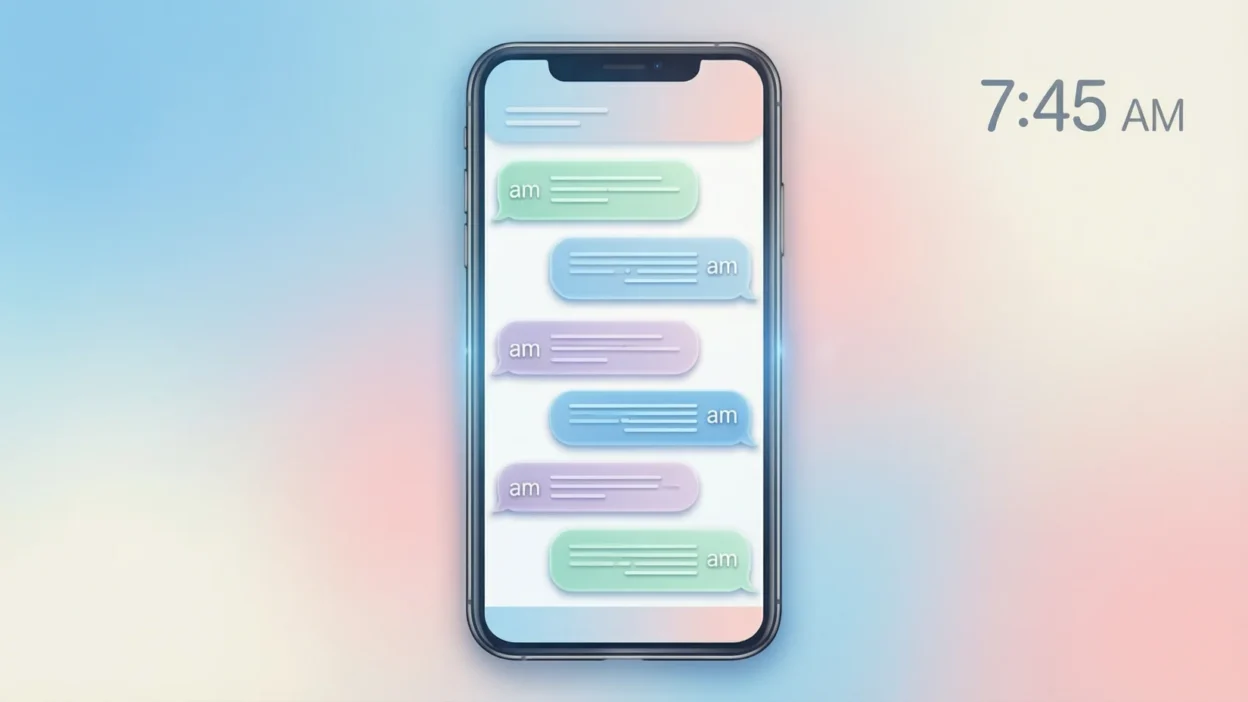
The first time you see “am” used in a message, it can feel confusing. Maybe someone texted, “see you at 9 am,” or maybe you saw a chat reply like, “i am good” shortened to just “am.” You pause for a second and think, wait… what does am stand for here?
That small two letter word shows up everywhere in texts, captions, comments, emails, and even gaming chats. Sometimes it’s about time, sometimes it’s about grammar, and sometimes it’s just quick typing. Let’s break it all down in a simple way so it finally makes sense.
Quick Answer
AM stands for “ante meridiem,” meaning before noon, and it can also be part of the verb phrase “I am” in casual text and online chats.
What Does AM Stand For in Text and Online Chat?
The meaning of AM depends on how and where it’s used. It has two main meanings, and both are very common in texting culture and online communication.
1. AM as Time (Ante Meridiem)
Full form: Ante Meridiem
Language: Latin
Meaning: Before midday (before 12:00 noon)
When am is used with a number, it almost always refers to time.
Plain English explanation:
If something happens after midnight but before noon, we use am.
Why people use it:
It helps separate morning times from afternoon and night times.
Example sentence:
- “my class starts at 8 am.”
Bold summary:
AM means before noon when talking about time.
2. AM as Part of “I Am” in Texting
In texting and informal chat, am is simply part of the verb “I am.”
People sometimes focus on the word am when asking what it means because they see it written casually or shortened in messages.
Plain English explanation:
It shows a state, feeling, or action connected to “I.”
Why people use it:
It’s basic grammar and often appears in fast typing or short replies.
Example sentence:
- “i am ready”
- “am tired today”
Bold summary:
AM is the helping verb used with “I” to describe a feeling, state, or action.
Where Is AM Commonly Used?
You’ll see am everywhere online and offline. The meaning depends on the context.
Common places you’ll see AM
- Text messages casual chats with friends
- Social media posts captions, comments, replies
- DMs Instagram, WhatsApp, Snapchat
- Emails mostly for time references
- Gaming chats scheduling or status updates
- Online forums event times or personal replies
Tone of AM
- Time related am: neutral to formal
- Text/chat am: casual and informal
So, “meeting at 10 am” feels professional, while “am bored rn” feels very casual.
Realistic Conversation Examples Using AM (Lowercase Style)
Here are some natural, modern chat-style examples you might see online:
- “are you free at 11 am tomorrow?”
- “am so tired today 😭”
- “i’ll call you at 9 am sharp”
- “am waiting for your reply”
- “what are you doing at 7 am?”
- “am good, just avoiding work lol”
- “that match starts at 10 am my time”
- “am not ready for monday”
- “am finally done with exams”
These examples show how am works naturally in texting and online chats.
When to Use AM and When Not to Use It
Using am correctly depends on the situation. Here’s a simple breakdown.
✅ When to Use AM
Do:
- Use am with times before noon
- Use am in casual texts when typing fast
- Use am in friendly online chats
- Use am when talking about schedules or plans
❌ When Not to Use AM
Don’t:
- Use am alone without context
- Use casual “am” style in formal writing
- Confuse am with pm
- Drop “I” in professional emails
Comparison Table
| Context | Example Phrase | Why It Works / Doesn’t Work |
|---|---|---|
| Texting a friend | “am tired today” | casual and natural |
| Work email | “am not available” | sounds unprofessional |
| Scheduling | “meeting at 9 am” | clear and correct |
| Formal essay | “am confused” | grammatically incorrect |
Similar Words and Alternatives to AM
Depending on how am is used, there are several alternatives.
Time-Related Alternatives
| Term | Meaning | When to Use |
|---|---|---|
| morning | early day time | casual talk |
| before noon | clear explanation | formal writing |
| a.m. | same as am | formal style |
| early hours | very early morning | descriptive writing |
Text and Chat Alternatives
| Word | Meaning | Usage |
|---|---|---|
| i’m | i am | casual texting |
| im | i am (no apostrophe) | fast typing |
| feeling | emotional state | expressive chats |
| currently | present state | neutral tone |
Each option fits a different tone, from casual chat to formal writing.
Frequently Asked Questions About AM
1. What does AM stand for in time?
AM stands for “ante meridiem,” which means before noon.
2. Is AM formal or informal?
When used for time, it’s neutral or formal.
When used in texting, it’s casual and informal.
3. Can AM mean something different in text messages?
Yes. In texting, am is often part of “I am”, especially in short replies.
4. Is it okay to write “am” without “I” in texts?
Yes, in casual chats it’s common.
Example: “am busy rn”
But avoid it in professional writing.
5. Do younger people use AM more in texting?
Yes. Younger users often drop extra words to type faster, making am very common in informal chats.
6. Is AM the same as PM?
No.
- AM = before noon
- PM = after noon
Mixing them up can cause confusion.
7. Can AM be misunderstood online?
Sometimes. Without context, people may not know if you mean time or “I am.” Clear wording helps.
Final Thought
AM may look small, but it plays a big role in modern communication. Whether you’re talking about time before noon or casually saying “I am” in a text, the meaning depends on context.
Understanding how am works helps you read messages correctly, avoid confusion, and communicate more clearly online. In today’s fast-moving texting culture, knowing these tiny details can make a big difference.