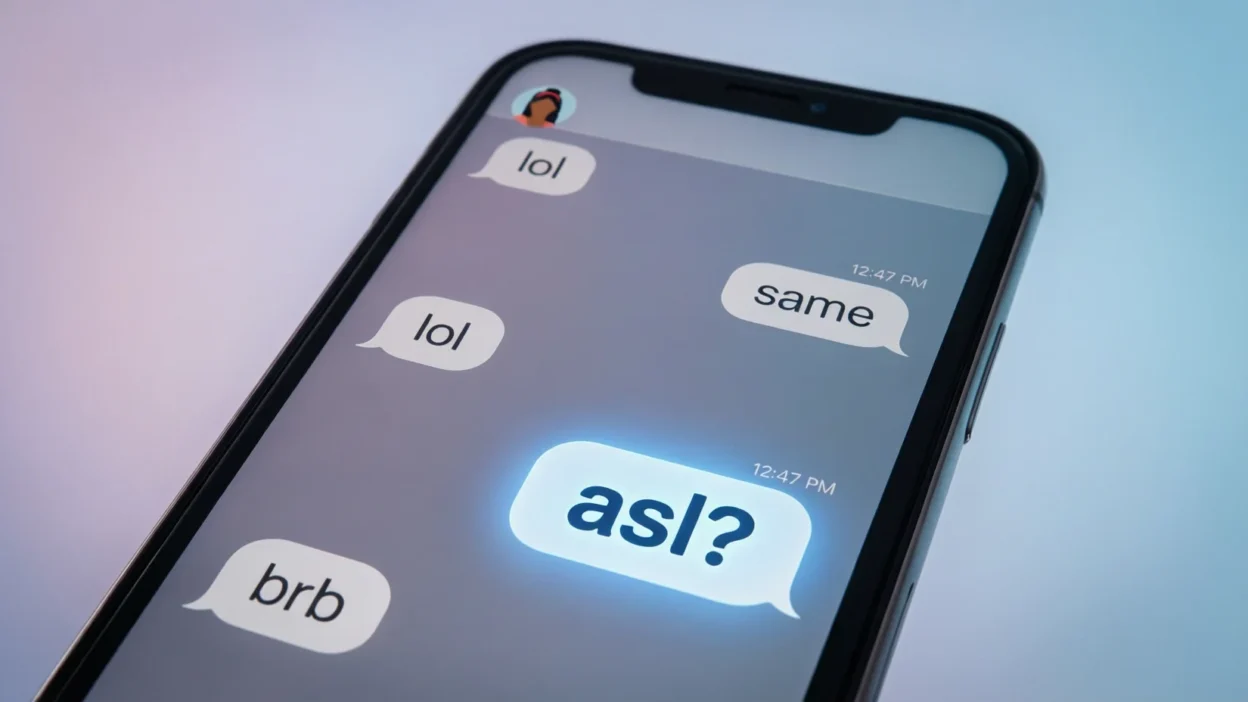
You’re scrolling through your messages late at night, half-watching a video, when a new text pops up: “asl?”
You pause. Is it a typo? A new slang word? Or something you’re supposed to know already? Maybe you’ve seen it in a comment section, a DM, or an online chat and felt a little confused but didn’t want to ask.
Don’t worry you’re not alone. ASL has been around for years, but it still pops up in modern texting and social media, leaving many people wondering what it really means and how to use it.
Quick Answer: In text, ASL means “age, sex, location.”
What Does ASL Mean in Text?
In texting and online chat, ASL is a short way of asking for age, sex, and location. It’s a quick question people use to learn basic details about someone they’re chatting with online.
Full form:
- A = age
- S = sex (or gender)
- L = location
In plain English, when someone types “asl?”, they are asking, “How old are you, are you male or female, and where are you from?”
People use ASL because it’s fast and easy. Instead of typing three questions, they can send one short message. It became popular in early internet chat rooms and still shows up in casual online conversations today.
Example sentence:
- “hey, you seem cool asl?”
Bold summary: ASL in text means asking someone’s age, sex, and location in a quick, informal way.
Where Is ASL Commonly Used?
ASL is mostly seen in casual and informal online spaces. You’re unlikely to see it in professional emails or serious conversations.
Common places where ASL appears include:
- Text messages between people who just met
- Social media DMs on platforms like Instagram or Snapchat
- Online chat rooms and forums
- Gaming chats where players talk while playing
- Comment sections on videos or live streams
The tone of ASL is usually casual and informal. Sometimes it can feel a bit personal or direct, especially if used too early in a conversation. Because of that, some people may find it awkward or intrusive.
ASL is not formal, and it’s rarely used in school, work, or professional online spaces.
Realistic Conversation Examples Using ASL
Here are some natural, modern texting style examples to show how ASL is used. These are written in lowercase to reflect real chats:
- “hey, i don’t think we’ve talked before. asl?”
- “you seem chill. asl?”
- “gg last round btw. asl?”
- “lol true. btw asl?”
- “just curious, asl?”
- “nice profile pic! asl?”
- “we’ve been chatting for a bit—asl?”
- “new here, what’s your asl?”
As you can see, ASL is usually short and straight to the point. It often comes after a little small talk, but sometimes people use it right away.
When to Use ASL (and When Not to)
ASL can be helpful in some situations, but it’s not always the best choice. Knowing when to use it and when to avoid it matters in texting culture.
✅ When to Use ASL
- When chatting in casual online spaces
- When talking to someone who is comfortable with slang
- In gaming chats or forums
- After some light conversation has already started
- When the vibe is relaxed and friendly
❌ When Not to Use ASL
- In professional or work-related messages
- With someone you don’t know well who may feel uncomfortable
- In formal settings like emails or school discussions
- When talking to younger users or in public spaces where privacy matters
- As the very first message, if it feels too direct
Small Comparison Table
| Context | Example Phrase | Why It Works / Doesn’t |
|---|---|---|
| casual chat | “hey, asl?” | works because tone is relaxed |
| gaming lobby | “nice play, asl?” | common and informal |
| work message | “hello, asl?” | doesn’t work too personal |
| first dm | “asl?” | may feel awkward or rude |
Similar Slang Words or Alternatives to ASL
If ASL feels too direct, there are softer or clearer ways to ask the same things. Here are some common alternatives used in texting and online chat.
| Alternative | Meaning | When to Use |
|---|---|---|
| “how old are you?” | asks age | casual but polite chats |
| “where are you from?” | asks location | friendly conversations |
| “m or f?” | asks gender | informal, but can feel blunt |
| “a/s/l?” | same as asl | older internet style |
| “tell me about yourself” | open-ended | more respectful approach |
Using full questions often feels more natural and less invasive, especially in modern social media slang and texting culture.
Common Misunderstandings About ASL
Some people confuse ASL with American Sign Language. While both use the same letters, the meaning depends on the context.
- In texting and online chat, ASL usually means age, sex, location.
- In education or accessibility topics, ASL often means American Sign Language.
Always look at the conversation to understand which meaning applies.
FAQs About What Does ASL Mean in Text
1. Does ASL always mean age, sex, location?
In texting and chat slang, yes. But in other contexts, ASL can also mean American Sign Language. Context is key.
2. Is ASL still used today?
Yes, but it’s less popular than before. Some people still use it in casual chats, gaming, and forums.
3. Is ASL rude or creepy?
It can feel that way if used too early or without context. Many people prefer softer questions now.
4. Do younger people use ASL?
Some do, but many younger users prefer full questions or other slang instead of ASL.
5. Can I use ASL on social media?
You can, but it’s best used in private messages, not public comments.
6. What should I reply if someone asks me ASL?
You can answer honestly, skip parts you’re not comfortable with, or respond with humor if you prefer.
7. Is ASL formal or informal?
ASL is informal and should only be used in relaxed online conversations.
Final Thought
So, what does ASL mean in text? It’s a simple, old school chat shorthand that asks for age, sex, and location. While it still shows up in modern texting and online chat meaning, it’s best used carefully.
Understanding when and when not to use ASL helps you communicate better, avoid awkward moments, and stay comfortable in today’s fast moving digital world. Like all social media slang, context matters more than the letters themselves.