
I still remember the first time I saw the words “black mold” pop up in a group chat. A friend sent a blurry photo of a dark patch on their bathroom ceiling and asked, “is this black mold?” That sent me down a late night internet rabbit hole, scrolling through images and stories, trying to figure out what black mold actually looks like.
If you’ve ever stared at a weird stain on your wall or ceiling and wondered the same thing, you’re not alone. Let’s break it down in a simple, no stress way.
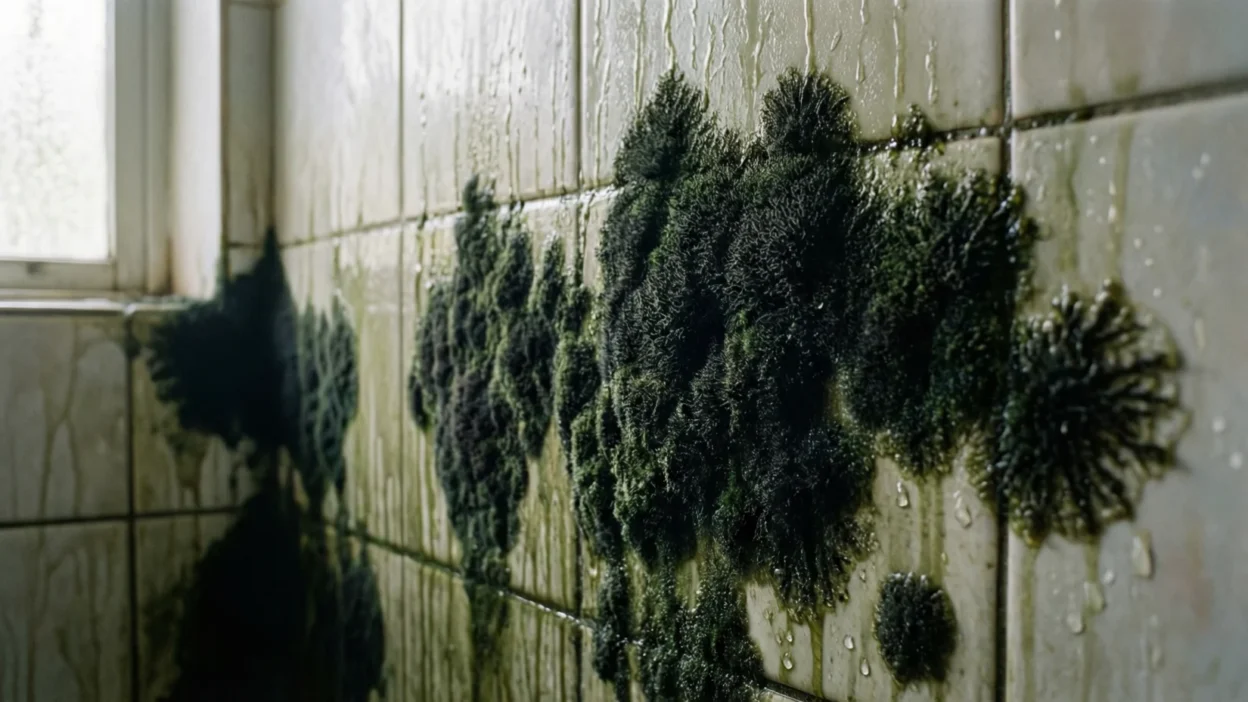
Quick Answer: Black mold usually looks like dark green or black spots or patches that may appear slimy, fuzzy, or powdery on damp surfaces like walls, ceilings, or wood.
What Does Black Mold Look Like, Really?
Black mold isn’t just one single look. The most talked-about type is Stachybotrys chartarum, often called “toxic black mold.” It loves wet, humid places and grows on materials like drywall, wood, carpet, and paper.
Here’s how people usually describe its look:
- Color: Black, dark green, dark gray, or even brown
- Texture: Slimy when wet, powdery or fuzzy when dry
- Shape: Small dots, clusters, or large spreading patches
- Edges: Uneven, blurry, or smudged
- Smell: Often a musty, earthy odor
It doesn’t always look pitch black. Sometimes it starts out greenish or gray and gets darker over time.
In simple words: Black mold is a dark, often messy-looking growth that shows up on damp surfaces and spreads if left alone.
Example: “I found dark, fuzzy spots behind the sink that look like black mold.”
Bold summary: Black mold looks like dark, fuzzy or slimy patches that grow on damp indoor surfaces.
Where You’re Most Likely to See Black Mold
Black mold shows up where moisture hangs around. It doesn’t usually grow in dry, sunny places.
Common spots include:
- Bathrooms: Shower walls, ceilings, around sinks
- Basements: Walls, floors, corners, storage boxes
- Kitchens: Under sinks, behind appliances
- Windows: Frames and sills with condensation
- Attics: Insulation, roof leaks
- Laundry rooms: Around washers and dryers
- Behind furniture: Especially near outside walls
Tone note: This topic is neutral and practical. People usually talk about it seriously because it can affect health and home safety.
9 Real-Life Conversation Examples
Here’s how people naturally talk about black mold online:
- “uhh does this black stuff on my ceiling look like black mold?”
- “my bathroom wall has dark fuzzy patches… kinda scared it’s black mold.”
- “anyone know what black mold looks like? found weird stains under my sink.”
- “is black mold always black or can it be green too?”
- “my landlord says it’s just dirt but it looks like black mold to me.”
- “just moved in and there’s dark spots behind the couch yikes.”
- “how fast does black mold spread? mine keeps getting bigger.”
- “can black mold look slimy? mine feels gross.”
- “is this dangerous or am i overthinking it?”
When to Worry and When Not To
Not every dark spot is black mold. But some signs mean you should take it seriously.
✅ Do Worry If:
- The spots keep growing
- It smells musty or earthy
- The area is always damp
- You feel sick or sneezy around it
- It looks fuzzy, slimy, or spreading
❌ Don’t Panic If:
- It’s a small surface stain
- It wipes off easily and doesn’t come back
- The area is usually dry
- There’s no smell
Quick Comparison Table
| Context | Example Phrase | Why It Works / Doesn’t |
|---|---|---|
| bathroom ceiling | “dark fuzzy spots on the ceiling” | likely mold due to moisture |
| dry living room wall | “tiny black dot that wiped off” | probably dirt or dust |
| under kitchen sink | “slimy green-black patch near pipe” | high mold risk |
| window sill | “powdery black stuff near condensation” | common mold area |
Black Mold vs. Other Types of Mold
Not all mold that looks dark is black mold. Here’s a quick guide:
- Black mold (Stachybotrys): Dark green or black, slimy, grows on wet drywall or wood
- Cladosporium: Black or green, powdery, common on windows and fabrics
- Aspergillus: Yellow, green, or brown, dusty texture
- Penicillium: Blue or green, fuzzy, grows fast
- Mildew: White or gray, powdery, easier to clean
Tip: You can’t be 100% sure just by looking. Lab testing is the only way to confirm the exact type.
Health Signs That Might Link to Black Mold
Some people feel fine around mold. Others don’t.
Possible symptoms include:
- Sneezing or coughing
- Runny nose
- Itchy eyes
- Headaches
- Skin rashes
- Breathing trouble (for sensitive people)
If symptoms get better when you leave the house, mold could be the reason.
What To Do If You Think You Found Black Mold
Stay calm. You’ve got options.
- Don’t touch it bare handed
- Take photos for records
- Ventilate the room
- Wear gloves and a mask
- Clean small areas with vinegar or mold cleaner
- Call a pro if it’s large or spreading
- Fix the moisture problem (leaks, humidity)
FAQs About What Black Mold Looks Like
1. Is black mold always black?
No. It can look dark green, gray, or brown too.
2. Can black mold look fuzzy or slimy?
Yes. It’s often fuzzy when dry and slimy when wet.
3. Does black mold smell?
Usually yes. It often has a musty, earthy odor.
4. Can I tell if it’s toxic black mold just by looking?
No. Only lab testing can confirm the type.
5. Does black mold grow fast?
Yes. It can spread in days if moisture stays.
6. Is all black-colored mold dangerous?
Not all black mold is toxic, but all mold should be taken seriously.
7. Should I move out if I see black mold?
Not always. Small areas can be handled, but large growth needs professional help.
Final Thought
So, what does black mold look like? It’s usually dark, messy, and shows up where moisture lives. It can be slimy or fuzzy, tiny dots or big patches.
The key is not to ignore it. Spot it early, clean it safely, and fix the moisture problem so it doesn’t come back. Knowing what black mold looks like helps you protect your home and your health before things get worse.