The first time I saw “dw” in a text, I honestly paused. Someone had just replied to my long, worried message with two tiny letters: dw. For a second, I wondered if they were annoyed or brushing me off. But then I realized the tone felt calm, even kind.
A few more chats later, I kept seeing it everywhere in group chats, Instagram DMs, and comment replies. That’s when it clicked. “dw” wasn’t rude at all. It was actually reassuring. If you’ve ever felt confused by this short reply, you’re not alone and this guide will clear it up fast.
Quick Answer:
“dw” in text means “don’t worry.”
What Does DW Mean in Text?
DW is a common texting abbreviation that stands for “don’t worry.”
In plain English, it’s a quick way to tell someone to relax, not stress, or that everything is under control. People use it to comfort others, brush off small issues, or show reassurance without typing a full sentence.
Because texting and online chat move fast, shorter phrases like dw help keep conversations flowing naturally. It saves time, feels casual, and matches modern texting culture.
Why people use “dw”:
- It’s fast and easy to type
- It sounds friendly and relaxed
- It fits casual chats and social media
- It avoids sounding too serious
Example sentence:
“dw, i’ll send it later tonight.”
Bold summary:
dw simply means “don’t worry” and is used to reassure someone in casual digital conversations.
Where Is “DW” Commonly Used?
You’ll mostly see dw in informal, digital spaces where quick replies matter more than perfect grammar.
Common places you’ll find “dw”:
- Text messages with friends or family
- Instagram, Snapchat, and TikTok DMs
- WhatsApp and Messenger chats
- Twitter/X replies and comments
- Gaming chats and Discord servers
- Online forums and group chats
The tone of dw is casual and informal. It’s friendly, relaxed, and supportive—but not professional.
You wouldn’t usually see it in emails, school assignments, or work messages unless the environment is very laid back.
Realistic Conversation Examples Using “DW”
Here are some natural, modern texting style examples. All are written in lowercase to reflect real chats:
- “sorry i’m late”
“dw, i just got here too” - “i forgot to send the pic 😭”
“dw, send it whenever” - “what if i mess it up?”
“dw, you’ll be fine” - “my bad for the typo”
“dw lol i knew what you meant” - “i can’t make it tonight”
“dw, we’ll reschedule” - “i’m nervous about the test”
“dw, you studied enough” - “that took longer than i thought”
“dw, no rush” - “sorry for bothering you”
“dw, i wasn’t busy”
These examples show how dw keeps conversations light, supportive, and stress-free.
When to Use and When Not to Use “DW”
Like most chat shorthand, dw works best in the right context.
✅ Do Use “DW” When:
- Talking to friends or people you know well
- Reassuring someone casually
- Chatting on social media or messaging apps
- Responding to small mistakes or delays
❌ Don’t Use “DW” When:
- Writing formal emails or professional messages
- Talking to teachers, clients, or managers
- Addressing serious emotional issues
- When reassurance needs detail or empathy
Quick Comparison Table
| Context | Example Phrase | Why It Works / Doesn’t |
|---|---|---|
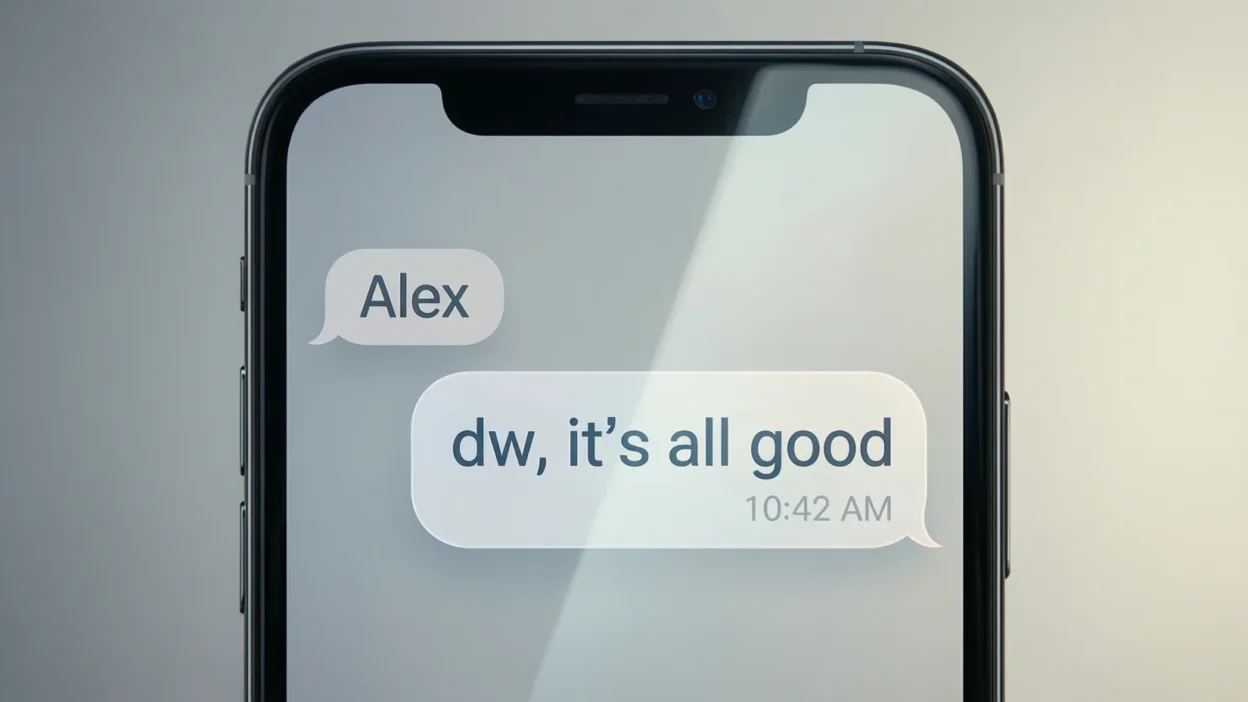
| casual texting | “dw, it’s all good” | friendly and relaxed |
| group chat | “dw guys, i fixed it” | fits informal tone |
| work email | “dw about the report” | too casual, sounds unprofessional |
| serious situation | “dw, it’ll pass” | may feel dismissive |
Similar Slang Words and Alternatives to “DW”
Sometimes dw isn’t the best fit. Here are common alternatives and when to use them.
Casual Alternatives
- np (no problem): used when someone apologizes
- all good: relaxed reassurance
- it’s ok / it’s okay: slightly more caring than dw
- no worries: friendly and conversational
Slightly More Supportive Options
- you’re fine: calming and direct
- it happens: normalizes mistakes
- take your time: removes pressure
More Formal Alternatives
- no need to worry: polite and professional
- that’s not an issue: workplace friendly
Each option fits a different tone, so choose based on the situation and who you’re talking to.
Frequently Asked Questions About “DW”
1. Does “dw” ever mean something negative?
No. In texting, dw almost always means “don’t worry.” Tone depends on context, but it’s usually positive or reassuring.
2. Is “dw” rude or dismissive?
Not usually. However, in serious conversations, it can feel dismissive if someone needs emotional support.
3. Do adults use “dw,” or is it just for teens?
Both. Teens, young adults, and even older users use dw, especially in casual online chats.
4. Can I use “dw” on social media?
Yes. It’s very common on Instagram, TikTok, Snapchat, Twitter/X, and Discord.
5. Should I capitalize “DW”?
Most people use lowercase “dw” to keep the tone relaxed, but capitalization doesn’t change the meaning.
6. Is “dw” okay to use at work?
Only in very informal workplaces or team chats. Otherwise, use a full phrase like “don’t worry” or “no problem.”
7. Can “dw” mean anything else?
In rare cases, DW can stand for other things (like initials), but in texting and chat slang, it means “don’t worry.”
Final Thought
So, what does dw mean in text? It’s a simple, friendly way to say “don’t worry” in modern digital communication. You’ll see it everywhere from texts and DMs to gaming chats and comment sections.
Used correctly, dw keeps conversations light, reassuring, and stress free. Just remember to match the tone to the situation. In casual chats, it’s perfect. In formal or serious moments, a fuller response works better. Understanding small slang like this helps you stay confident and connected in today’s fast-moving texting culture.