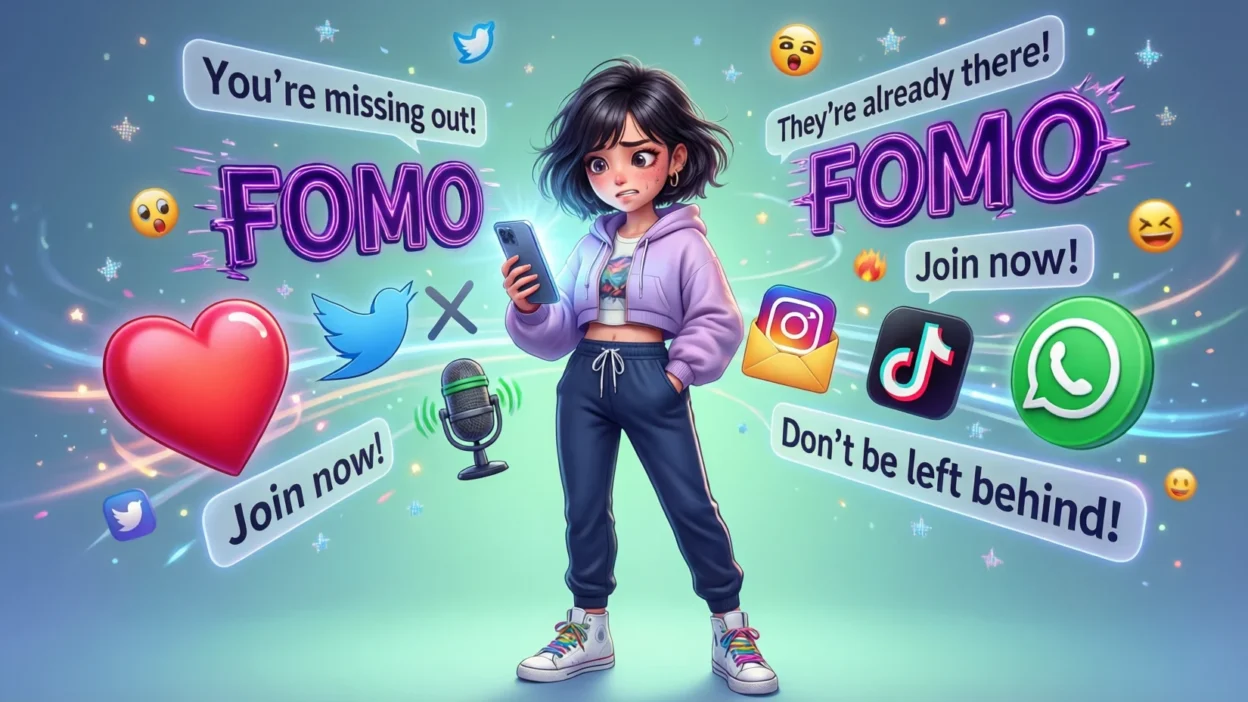
Scrolling through a group chat one evening, you notice your friends texting about a party you weren’t invited to. Between the messages, someone types, “ugh, total FOMO rn.” You pause, staring at your screen, wondering what “FOMO” even stands for.
Maybe you’ve seen it in social media captions, tweets, or even gaming chats and thought it sounded like some secret code. Well, it’s not complicated but understanding it can make a big difference in how you relate to online conversations and modern slang. Let’s break it down in simple terms so you never feel left out again.
Quick Answer: FOMO stands for “Fear of Missing Out”, meaning the anxiety or worry that you’re missing an exciting or important experience.
What FOMO Really Means
Full Form: FOMO Fear Of Missing Out
In plain English, FOMO is that uneasy feeling you get when you think something fun, exciting, or important is happening without you. People use it to express their worry about missing out on social events, online trends, or even opportunities in life.
For example:
“I didn’t go to the concert, and now I have major FOMO.”
This term captures a mix of curiosity, excitement, and slight anxiety basically, it’s the feeling of wanting to be where the action is.
In short: FOMO is the fear or worry that you’re missing something important or fun.
Where FOMO is Commonly Used
FOMO appears almost everywhere in casual digital communication:
- Texting & Messaging Apps: Group chats, private texts, or iMessage threads.
- Social Media Platforms: Instagram captions, TikTok videos, Facebook posts, or Twitter threads.
- Comments & DMs: Responding to friends who are attending events or sharing viral content.
- Gaming Chats: Multiplayer games where friends discuss live events, drops, or tournaments.
- Online Forums & Communities: Reddit threads or Discord channels when people talk about trends or news.
The tone is almost always casual and informal, sometimes playful or dramatic, especially among teens and young adults. You rarely see it in formal writing or professional emails.
Realistic Conversation Examples of FOMO
Here are some natural, modern ways FOMO pops up in online chats:
- “omg i saw everyone at the beach today, total fomo 😩”
- “missed the new episode huge fomo right now”
- “you’re at a festival without me? fomo hitting hard”
- “fomo is real, literally watching everyone post stories”
- “not gonna lie, kinda feeling fomo rn”
- “all these concert pics my fomo can’t deal”
- “fomo making me consider going even tho i’m broke”
- “ugh, fomo is why i keep scrolling insta”
- “they went hiking without me, fomo levels 100”
Notice how casual, lowercase, and emoji friendly these examples are they reflect real texting culture.
When to Use and Not Use FOMO
FOMO is a fun, relatable term, but it works best in the right context.
Do Use FOMO:
- When expressing missing out on events, trends, or opportunities.
- In casual group chats, social media posts, or DMs.
- To humorously exaggerate your minor anxieties about missing out.
Don’t Use FOMO:
- In professional emails or formal communication.
- When referring to serious situations unrelated to social or online activities.
- In contexts where the meaning could be misunderstood without explanation.
Comparison Table:
| Context | Example Phrase | Works or Not? | Why |
|---|---|---|---|
| Casual chat with friends | “fomo is real rn lol” | Works | Casual, relatable, informal tone |
| Work email | “experiencing FOMO due to missing meeting” | Not recommended | Too casual for professional setting |
| Social media caption | “fomo hitting hard after seeing this concert” | Works | Matches informal, fun tone |
| Serious crisis | “fomo about missing news” | Not recommended | Could trivialize serious topic |
Similar Slang Words or Alternatives
Here are a few alternatives to FOMO, depending on context:
| Slang/Term | Meaning | Best Use Case |
|---|---|---|
| JOMO | Joy Of Missing Out; enjoying not participating | For celebrating downtime or self-care |
| YOLO | You Only Live Once; take chances, don’t miss out | Casual encouragement to join events |
| Lit | Exciting, fun, or lively | Describing events or moments |
| Hype | High excitement or anticipation | When discussing trends or releases |
| SMH | Shaking My Head; disbelief or frustration | Expressing disappointment, not exactly FOMO |
Each alternative captures slightly different feelings, so pick one based on whether you’re anxious, excited, or just observing trends.
FAQs About FOMO
1. Is FOMO only used online?
Mostly, yes. FOMO became popular through texting, social media, and online culture, though people can experience it in real life too.
2. What age group uses FOMO the most?
Teens and young adults (13–30) use it frequently, but anyone active on social media can relate.
3. Can FOMO be negative?
Yes, constant FOMO can cause stress, anxiety, and pressure to overcommit to social events.
4. Is FOMO formal or informal?
It’s informal and casual. Avoid using it in professional emails or academic writing.
5. Are there other similar acronyms I should know?
Yes, JOMO, YOLO, SMH, and Lit are common in modern texting culture.
6. Can FOMO apply to work or school?
Yes, but it’s usually more playful, e.g., missing a popular online webinar or trending project.
7. How do you respond if someone says “fomo”?
You can empathize (“same here lol”) or joke about it (“don’t worry, you’re missing nothing”).
Final Thought
FOMO, short for Fear of Missing Out, is one of the most common terms in modern digital communication. It perfectly captures the anxious yet relatable feeling of wanting to be part of social events, trends, or online moments.
From texting friends about parties to scrolling through social media feeds, FOMO keeps conversations lively and expressive. Knowing when and how to use it makes you feel more connected to online culture and helps you avoid the stress of constantly comparing yourself to others.
So next time you see “FOMO” in a chat, you’ll know exactly what it means and how to use it confidently.