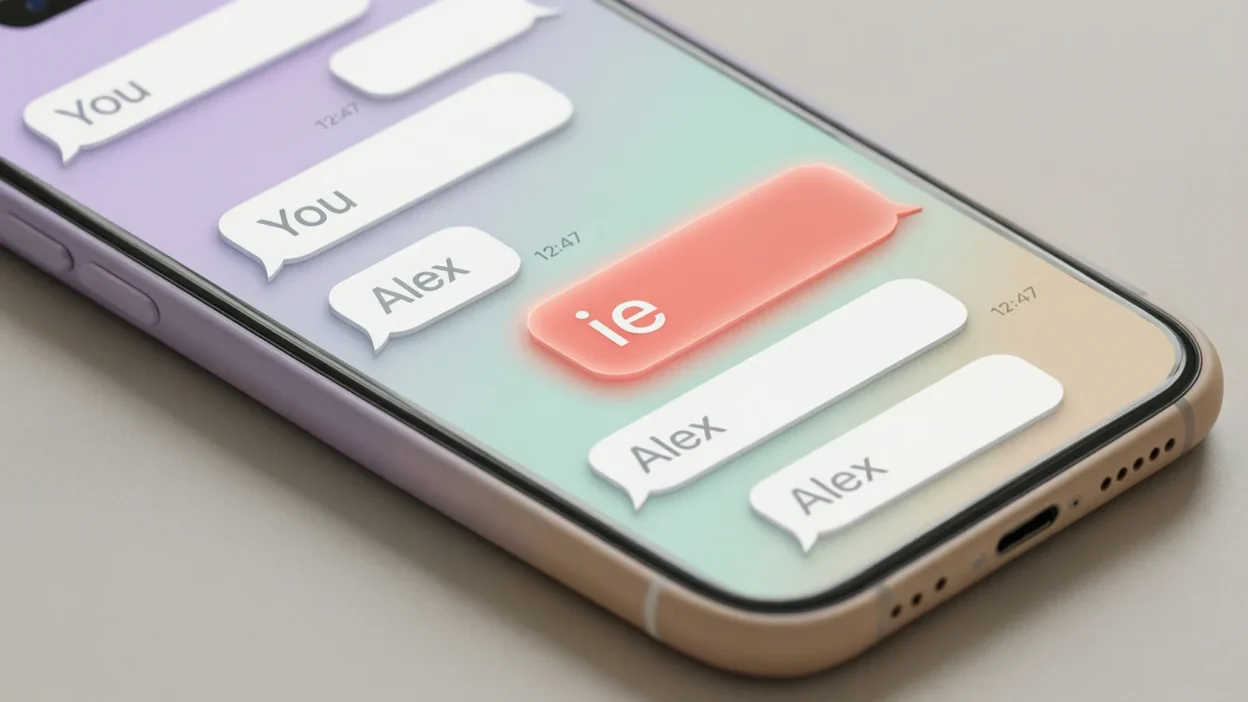
The first time I saw “ie” in a message, I honestly thought it was a typo. A friend texted, “let’s meet after work, ie around 6,” and I reread it twice. Was it slang? Was it short for something? I’d seen it before in posts, comments, even school notes, but never really stopped to think about what it meant. Once I looked it up, everything clicked.
It turns out ie is one of those small terms that quietly shows up everywhere online and offline. If you’ve ever paused mid message wondering what it means, you’re definitely not alone.
Quick Answer: IE means “that is” and is used to clarify, explain, or restate something in simpler terms.
What Does IE Mean in Text?
IE is short for the Latin phrase “id est,” which translates to “that is” in English.
In plain English, ie is used when someone wants to explain something more clearly or give a specific meaning. It’s like saying, “I mean” or “in other words.”
People use ie in text because:
- It saves time
- It sounds clear and direct
- It helps avoid confusion
Example sentence:
“we’ll meet at the office ie the main building.”
Bold summary: IE means “that is” and is used to explain or clarify a statement.
Where Is IE Commonly Used?
You’ll see ie in both casual and semi formal settings, which makes it a bit unique compared to other texting abbreviations.
Common places include:
- Text messages
- Social media captions and comments
- Emails and DMs
- School notes and explanations
- Online forums and blogs
The tone of ie is usually neutral. It’s not slangy, but it’s not stiff either. It fits well in everyday writing and informal chat, especially when someone wants to be precise.
IE vs EG (Quick Clarity)
Many people confuse ie with eg, but they’re not the same.
- IE = that is (clarification)
- EG = for example (one or more examples)
Knowing this difference helps you use ie correctly in text and online chat.
Realistic Conversation Examples Using IE
Here are some natural, modern examples written in lowercase, just like real chats:
- “let’s grab food nearby ie somewhere walkable”
- “i’m free tomorrow ie after 5pm”
- “he moved to the city ie downtown”
- “we need supplies ie paper and pens”
- “meet at your place ie the new apartment”
- “she meant casual ie no dress code”
- “i’ll explain later ie when we talk”
- “we’re late ie running behind”
- “that rule applies here ie this group”
These examples show how ie slips easily into everyday messages.
When to Use IE and When Not to Use It
Using ie correctly makes your message clearer. Using it wrong can confuse people.
✅ Do Use IE When:
- You want to clarify what you just said
- You’re restating something more simply
- You want to be precise in text or writing
- Your audience understands basic abbreviations
❌ Don’t Use IE When:
- You’re giving examples (use eg instead)
- You’re talking to someone unfamiliar with it
- The sentence is already very clear
- You’re writing very casually and clarity isn’t needed
Small Comparison Table
| Context | Example Phrase | Why It Works / Doesn’t |
|---|---|---|
| casual text | “after work ie around 6” | clear clarification |
| school note | “two options ie plan a or b” | precise explanation |
| example list | “fruits ie apples and bananas” | works only if complete |
| random chat | “cool ie” | confusing and unclear |
Similar Words or Alternatives to IE
If ie feels too formal or unclear for your situation, there are easy alternatives.
| Alternative | Meaning | When to Use |
|---|---|---|
| that is | same meaning as ie | clear, all audiences |
| in other words | restates simply | explaining ideas |
| i mean | casual clarification | friendly chats |
| basically | simplified meaning | informal chat |
| to be exact | adds precision | semi-formal writing |
Each option fits different tones in texting culture and online communication.
Why IE Is Still Popular in Digital Communication
Even with emojis and short slang everywhere, ie sticks around because it’s useful. It helps people be clear without writing extra sentences.
In modern texting culture, clarity matters just as much as speed. IE bridges that gap by being short, simple, and precise.
Common Misunderstandings About IE
Some people think:
- IE is slang (it’s not)
- IE and EG mean the same thing (they don’t)
- IE is outdated (it’s still widely used)
Understanding the meaning helps you read messages correctly and sound more confident when you write.
Frequently Asked Questions About What Does IE Mean
1. What does ie stand for?
It stands for id est, a Latin phrase meaning “that is.”
2. Is ie a texting abbreviation?
Yes, it’s commonly used in text, but it’s not modern slang.
3. Is ie formal or informal?
It’s neutral and works in both casual and semi formal writing.
4. Can ie be used on social media?
Yes. You’ll often see it in captions, comments, and replies.
5. Is ie the same as eg?
No. IE explains, while EG gives examples.
6. Do I need commas around ie?
Usually yes. It’s often written as “, ie,” in a sentence.
7. Is ie still used today?
Absolutely. It’s common in texts, emails, and online writing.
How IE Fits into Texting and Online Chat Meaning
As people mix casual chat with clear communication, terms like ie become very useful. It’s short enough for texting and clear enough for explanation.
That’s why you’ll see it across social media slang, chat shorthand, and even school or work messages.
Final Thought
So, what does ie mean? It simply means “that is.” It’s used to explain, clarify, or restate something more clearly.
If you’re texting a friend, writing a post, or explaining an idea, ie helps keep communication simple and precise. Understanding it makes online chats easier to follow and your own messages more confident and clear.