Have you ever been scrolling through a group chat, comment section, or social media thread and stumbled across the term “IMO” and paused, thinking, “Wait… what does that mean?” Maybe a friend texted, “imo, that movie wasn’t that great,” and you weren’t sure if it was a typo or some secret code. If that sounds familiar, you’re not alone.
Modern texting is full of shorthand and slang that can feel like a whole new language. Luckily, IMO is one of the easier ones to decode, and once you know it, you’ll see it everywhere online.
Quick Answer:
IMO means “In My Opinion.”
What IMO Means in Text
IMO is an abbreviation for “In My Opinion.” It’s used to express a personal thought, perspective, or viewpoint without sounding too formal. People often use it to share their feelings or judgments casually in conversation, whether about movies, food, politics, or everyday life.
For example:
- “imo, pineapple on pizza is actually amazing.”
The point of IMO is to make it clear that what you’re saying is subjective it’s your personal take, not a universal fact. It’s friendly, conversational, and keeps discussions light without sounding bossy or argumentative.
In short: IMO simply signals that you’re sharing your opinion in a casual, respectful way.
Where IMO Is Commonly Used
IMO is most often seen in casual digital communication. Here’s where you’ll likely encounter it:
- Text messages: Between friends or family when giving a personal viewpoint.
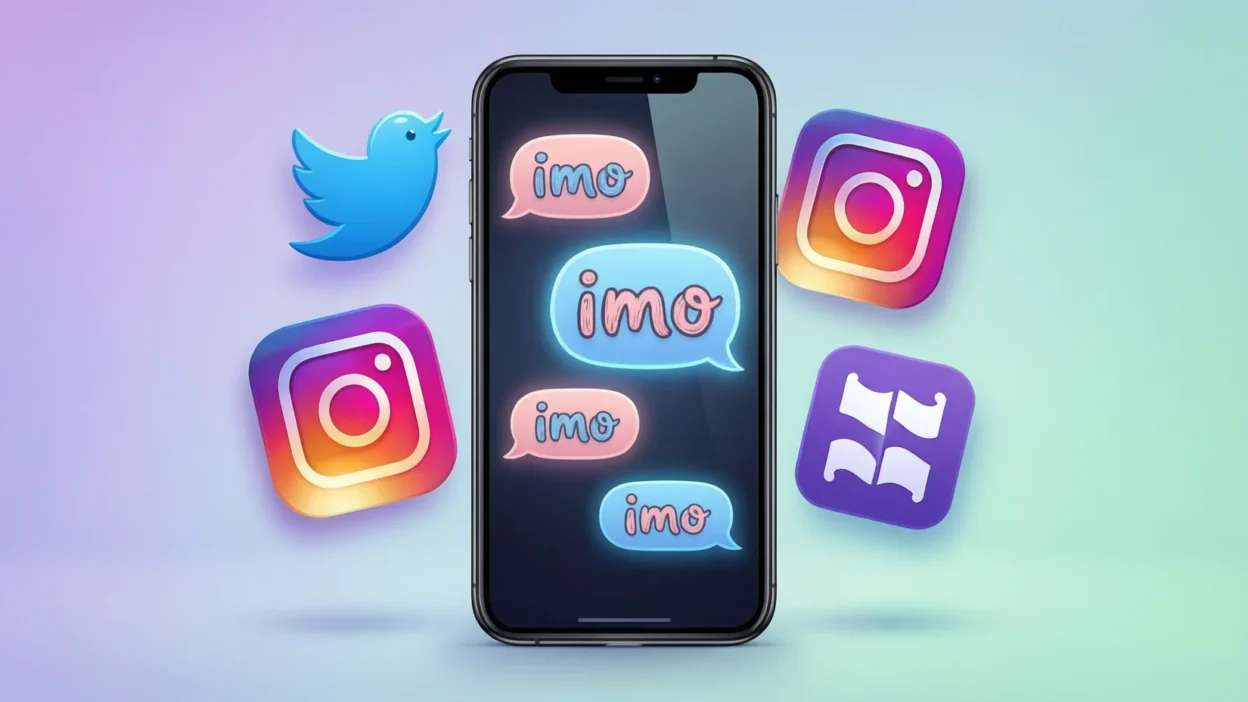
- Social media posts & comments: Platforms like Twitter, Instagram, or Facebook.
- Direct messages (DMs): Chatting one on one with someone online.
- Gaming chats: In multiplayer games when sharing strategies or preferences.
- Online forums & discussion boards: Reddit, Discord, or niche communities.
Tone: Casual, informal, friendly, and sometimes neutral. It’s not suited for professional emails, work documents, or formal writing.
7 Realistic Chat Examples Using IMO
Here are some modern, lowercase texting style examples of IMO in real-life chats:
- “imo, we should just skip the party and chill at home”
- “that movie was kinda overrated imo”
- “imo, you’re totally overthinking it”
- “imo, chocolate ice cream > vanilla”
- “he’s a good singer, but imo she’s way better”
- “imo, online classes are more convenient than in-person”
- “that was funny, imo the best joke all day”
- “imo, the book was better than the movie adaptation”
These examples show how IMO is used naturally in casual, everyday digital conversations.
When to Use and When Not to Use IMO
Using IMO effectively can make your chats clearer and friendlier. Here’s a quick guide:
Do Use IMO When:
- You want to express a personal opinion.
- Discussing subjective topics like movies, games, or food.
- Responding casually in social media comments or chats.
- Trying to soften criticism or disagreement.
Don’t Use IMO When:
- Writing formal emails or professional documents.
- Giving instructions or factual statements.
- In serious debates where your opinion might be misinterpreted as a fact.
Comparison Table
| Context | Example Phrase | Why It Works / Doesn’t Work |
|---|---|---|
| Casual text with friends | “imo, that’s the best song” | Works perfectly casual, friendly opinion |
| Professional email | “imo, we should change the deadline” | Doesn’t work sounds informal and unprofessional |
| Online forum discussion | “imo, the game is too hard” | Works shows subjective viewpoint in discussion |
Similar Slang Words or Alternatives
If you like IMO, here are other shorthand expressions commonly used online:
| Slang/Abbreviation | Meaning | When to Use |
|---|---|---|
| IMHO | In My Humble Opinion | Slightly more polite version of IMO, casual chats or debates |
| TBH | To Be Honest | When sharing honest opinions, often softer or more personal |
| FWIW | For What It’s Worth | Used when giving a minor opinion or suggestion |
| IIRC | If I Recall Correctly | Expresses opinion based on memory, casual chats |
| AFAIK | As Far As I Know | When sharing info or opinions with some uncertainty |
| FYI | For Your Information | Informational, not opinion-based, still casual |
These variations let you express your thoughts in slightly different ways depending on context and tone.
FAQs About IMO
1. Is IMO formal or casual?
IMO is casual and informal, mainly for chats, social media, and online conversations.
2. Can I use IMO in professional emails?
It’s not recommended for professional or formal emails. Stick to full phrases like “In my opinion” instead.
3. Who typically uses IMO?
Mostly teens, young adults, and anyone active in digital communication or social media.
4. Is IMO the same as IMHO?
Similar, but IMHO adds “humble,” making it slightly more polite or soft.
5. Can IMO be misunderstood?
Rarely, but sometimes people might think it’s a typo. Context usually makes it clear.
6. Can IMO be used in text, comments, and DMs?
Yes, it works well across all informal digital platforms.
7. Does IMO have a tone?
Yes, casual, friendly, and non-confrontational great for softening opinions.
Final Thought
In today’s fast-paced texting culture, abbreviations like IMO help people express opinions quickly and clearly. Whether you’re in a group chat, scrolling social media, or commenting on a forum, using IMO shows that you’re sharing a personal perspective without sounding bossy.
Understanding and using IMO correctly can make your digital conversations smoother, friendlier, and more relatable. So next time you see IMO pop up in a chat, you’ll know exactly what it means and maybe even start using it yourself.