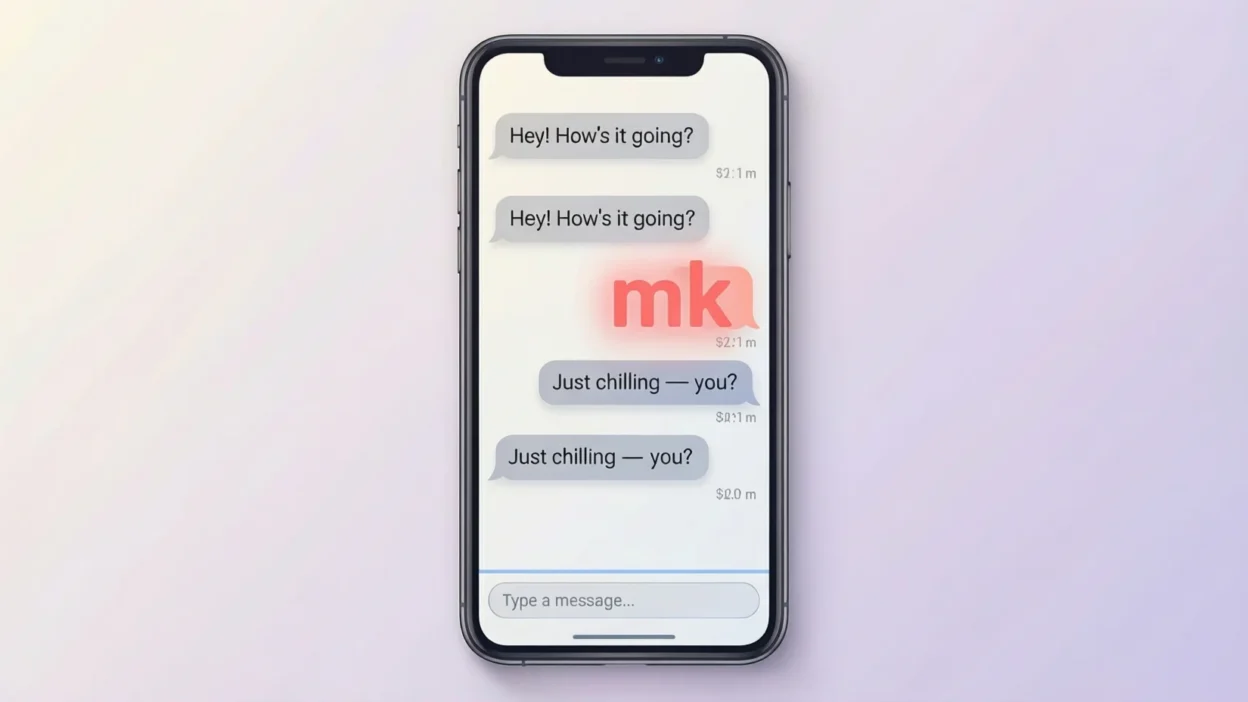
The first time you see “mk” in a text, it can feel confusing. Someone sends you a long message, you reply with a clear answer, and they respond with just two letters: mk. No emojis. No extra words.
You might pause and think, Are they annoyed? Are they agreeing? Did I miss something? This tiny slang term pops up everywhere from group chats to Instagram DMs and its short length makes it easy to misunderstand. If you’ve ever wondered what it really means and how to use it without sounding awkward, you’re in the right place.
Quick Answer:
“mk” in text means “okay” or “alright,” often used to show agreement or acknowledgment in a casual way.
What Does MK Mean in Text?
Full form:
There is no official full form. “mk” is a shortened, casual version of “okay” (sometimes written as mkay).
Plain-English meaning:
When someone texts “mk,” they’re basically saying “okay,” “got it,” or “that’s fine.” It shows agreement or understanding without adding extra emotion.
Why people use it:
- It’s fast and easy to type
- It sounds relaxed and low effort
- It keeps conversations moving
- It fits modern texting culture where shorter is better
Example sentence:
“i’ll be there at 7.”
“mk”
Bold summary:
mk is a casual texting shortcut that means okay or alright, often used to acknowledge or agree.
Where Is MK Commonly Used?
You’ll mostly see mk in informal digital spaces where short replies are normal.
Common places it appears:
- Text messages with friends
- Instagram, Snapchat, and WhatsApp chats
- Twitter/X replies or DMs
- Discord and gaming chats
- Group chats and casual online forums
Tone:
- Casual
- Informal
- Usually neutral, but can sound dry depending on context
It’s not rude by default, but because it’s short and emotionless, it can feel cold if the conversation is serious.
Realistic Conversation Examples Using MK
Here are some natural, modern examples of how mk is used in everyday chats. All examples are written in lowercase, just like real texting.
- “i’ll send the file tonight”
“mk” - “meet me outside in 5 mins”
“mk coming” - “don’t forget to call mom”
“mk i won’t” - “we’re changing the plan btw”
“mk thanks for telling me” - “i can’t make it today”
“mk no worries” - “let’s talk tomorrow instead”
“mk works for me” - “game starts at 9 sharp”
“mk” - “i’ll handle it”
“mk appreciate it”
Notice how mk keeps things simple. It’s not emotional it just confirms understanding.
When to Use MK (and When Not to)
Like most text slang, mk works best in the right situations.
✅ Do Use MK When:
- Chatting with friends or close people
- Replying to simple instructions or updates
- Acknowledging information quickly
- Keeping conversations short and casual
❌ Don’t Use MK When:
- Talking to your boss, teacher, or client
- Responding to emotional or serious messages
- Writing professional emails or formal texts
- You need to show empathy or excitement
Small Comparison Table
| Context | Example Phrase | Why It Works / Doesn’t |
|---|---|---|
| casual chat | “i’ll text you later” “mk” | works because tone is relaxed |
| group plans | “we meet at 6” “mk” | quick confirmation is fine |
| emotional message | “i’m really stressed today” “mk” | sounds cold and uncaring |
| work message | “please review this doc” “mk” | too informal for professional tone |
Similar Slang Words and Alternatives to MK
If mk doesn’t feel right, here are other texting alternatives and when to use them.
| Slang | Meaning | When to Use It |
|---|---|---|
| ok | okay | neutral and widely accepted |
| okay | okay | slightly more polite |
| k | okay | very casual, can sound rude |
| kk | okay | friendly, often in gaming chats |
| got it | i understand | clearer and more polite |
| alright | okay | casual but warmer |
| sure | agreement | when you actively agree |
| np | no problem | when reassuring someone |
Tip:
If you want warmth, add a word or emoji: “mk thanks” or “mk 👍”
Common Misunderstandings About MK
Because mk is so short, people sometimes misread it.
- It does not usually mean sarcasm
- It does not automatically mean annoyance
- It can sound dry if used alone
- Tone depends on the conversation
If you’re unsure, adding context helps: “mk sounds good”
Frequently Asked Questions (FAQs)
1. Does mk mean okay or maybe?
mk almost always means okay, not maybe. It shows agreement or acknowledgment.
2. Is mk rude in texting?
No, mk is not rude, but it can feel cold if the conversation is emotional or serious.
3. Who usually uses mk?
It’s most common among teens, young adults, and frequent texters, especially on social media and chat apps.
4. Can I use mk on social media?
Yes. mk is common on Instagram, Snapchat, Discord, and gaming chats, but not ideal for professional platforms.
5. Is mk the same as “k”?
They’re similar, but mk sounds slightly softer than “k,” which can feel dismissive.
6. Should I use mk at work?
It’s best not to use mk in work or formal messages. Stick with “okay” or “got it.”
7. Can mk mean something negative?
Not usually. Any negative tone comes from context, not the word itself.
Final Thought
MK is one of those tiny texting shortcuts that perfectly fits modern digital communication. It’s quick, casual, and easy to use when you just want to say “okay” without overthinking it.
While it works great in friendly chats and social media conversations, it’s not always the best choice for emotional or professional situations. Understanding when and how to use mk helps you text more naturally and avoid awkward misunderstandings in today’s fast-moving texting culture.