
You’re scrolling through your phone when a friend texts, “ugh, i think i’ve got pink eye 😩.”
You pause. Pink eye? You’ve heard the term before maybe in school, maybe online but suddenly you’re wondering what it actually looks like. Is it just a little redness? Is it super obvious? Could you already have it and not even know?
That quick moment of confusion is super common. Pink eye gets mentioned a lot in chats, comments, and even memes, but no one really explains what it looks like in real life. Let’s clear that up in a simple, no stress way.
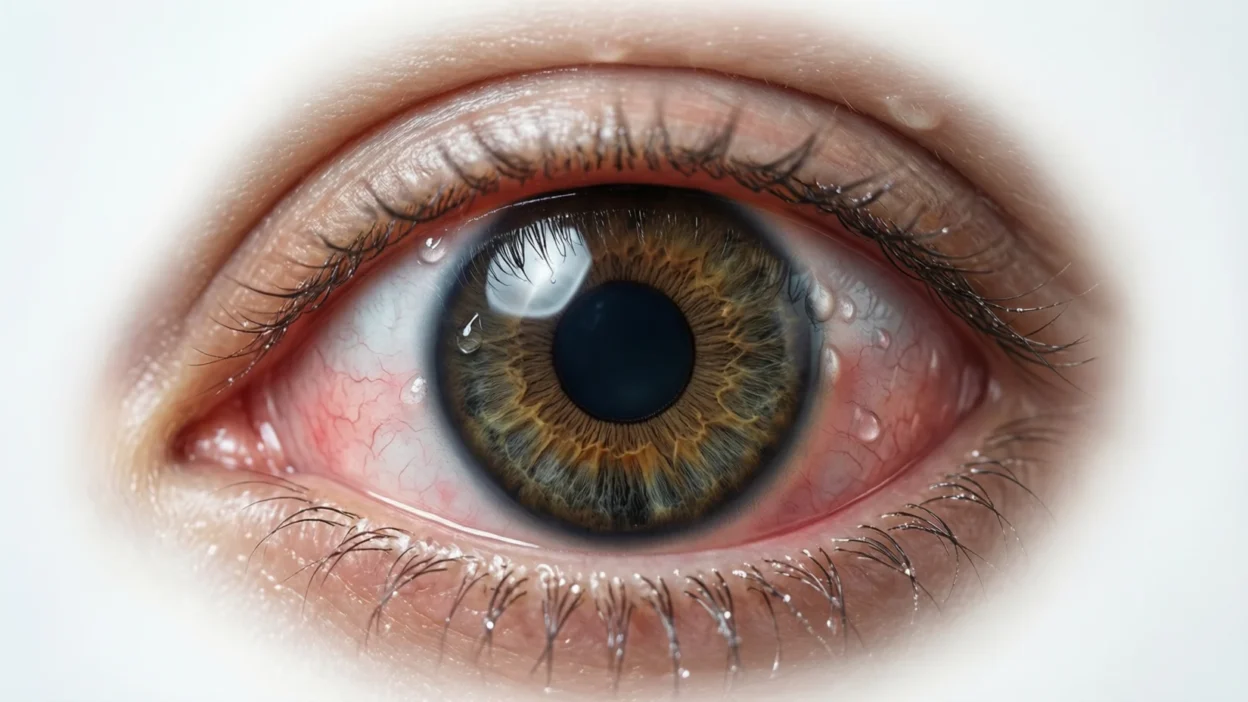
Quick Answer: Pink eye usually looks like a red or pink eye with irritation, watering, swelling, and sometimes sticky discharge.
What Does Pink Eye Mean? (Plain English Explanation)
Pink eye is the common name for conjunctivitis.
That’s a long word, but the idea is simple.
The conjunctiva is a thin, clear layer that covers the white part of your eye and the inside of your eyelids. When this layer gets irritated or infected, it turns red or pink—hence the name pink eye.
What pink eye looks like in everyday terms
- The white part of the eye looks pink or bright red
- The eye may look puffy or swollen
- It can appear watery, glossy, or sticky
- Lashes might be stuck together, especially after sleep
Why people use the term “pink eye”
- It’s easy to say and remember
- It sounds less scary than “conjunctivitis”
- Doctors, parents, and people online all understand it
Example sentence:
“i woke up with one red eye and crusty lashes, so yeah… pretty sure it’s pink eye.”
👉 Bold takeaway: Pink eye is when the white part of the eye turns pink or red due to irritation or infection.
What Does Pink Eye Look Like in Real Life?
Pink eye doesn’t look the same for everyone, but there are some clear signs most people notice right away.
Common visual signs
- Red or pink color in one or both eyes
- Swollen eyelids, sometimes mild, sometimes puffy
- Watery tears that don’t stop
- Yellow, white, or green discharge (more common in bacterial cases)
- Crusty buildup on lashes, especially in the morning
How it usually feels
- Itchy or scratchy, like something’s in your eye
- Burning or stinging
- Gritty feeling when you blink
- Sensitive to light
Some people get pink eye in one eye first, then it spreads to the other.
Different Types of Pink Eye and How They Look
Not all pink eye is the same. The look can change depending on the cause.
Viral pink eye
- Very red and watery
- Clear discharge
- Often comes with a cold or flu
- Highly contagious
Bacterial pink eye
- Thick yellow or green discharge
- Eyes may be glued shut after sleep
- Redness plus swelling
Allergic pink eye
- Both eyes affected
- Itchy, not painful
- Watery eyes, no thick discharge
- Often comes with sneezing or allergies
Irritant-related pink eye
- Caused by smoke, chlorine, dust, or chemicals
- Red and watery
- Gets better once the irritant is gone
Where You’ll Commonly See or Hear “Pink Eye” Used
The term pink eye shows up everywhere, especially online.
Common places it’s mentioned
- Text messages and group chats
- Social media posts and comments
- Parenting forums
- School or daycare messages
- Health TikToks and Instagram reels
- Gaming chats (“brb, eye’s messed up pink eye maybe”)
Tone of the term
- Casual
- Informal
- Not medical or formal
- Friendly and widely understood
People rarely say “conjunctivitis” in chats unless they’re joking or being extra serious.
Realistic Conversation Examples (Modern Text Style)
Here’s how “pink eye” actually shows up in everyday online chats:
- “why is my eye so red today… pls don’t be pink eye”
- “my kid can’t go to school, daycare says pink eye 😭”
- “i woke up and my eye was crusty, i’m scared”
- “nah i’m not coming, pretty sure i caught pink eye”
- “is pink eye painful or just annoying?”
- “don’t share towels, i had pink eye last week”
- “this eye itch is driving me to exasperate,”
- “tell me why my eye is pink but i feel fine”
- “google says pink eye but google always dramatic”
When to Use and When NOT to Use the Term “Pink Eye”
✅ Do use it when
- Talking casually with friends or family
- Describing symptoms in simple terms
- Posting on social media or forums
- Messaging teachers, parents, or coworkers informally
❌ Don’t use it when
- Writing a formal medical report
- Talking to a doctor in official paperwork
- Writing academic or health articles
- When clarity really matters (use “conjunctivitis” instead)
Quick comparison table
| Context | Example Phrase | Why It Works (or Doesn’t) |
| texting a friend | “i think i’ve got pink eye” | casual and clear |
| doctor form | “pink eye” | too informal |
| school message | “my child has pink eye” | widely accepted |
| medical essay | “pink eye” | not professional |
Similar Terms or Alternatives You Might See
Here are related words people use instead of or alongside pink eye:
| Term | Meaning | When It’s Used |
| conjunctivitis | medical name for pink eye | doctors, clinics |
| eye infection | general eye problem | casual but vague |
| red eye | symptom, not a diagnosis | informal chats |
| eye irritation | mild discomfort | when unsure |
| allergic eye reaction | allergy-related pink eye | seasonal allergies |
Tip: If you’re unsure, “eye irritation” is a safe, neutral choice.
Frequently Asked Questions (FAQ)
1. What does pink eye look like at the start?
Usually mild redness, watery eyes, and slight itchiness before it gets worse.
2. Can pink eye affect only one eye?
Yes. It often starts in one eye and may spread to the other.
3. Is pink eye always serious?
No. Many cases are mild and clear up on their own, especially viral or allergic types.
4. Can kids and adults both get pink eye?
Yes. It’s common in children but adults get it too.
5. Is pink eye the same as eye strain?
No. Eye strain doesn’t cause redness or discharge like pink eye does.
6. Is the term “pink eye” okay to use online?
Yes. It’s very common in social media slang and informal chats.
7. Can pink eye be misunderstood online?
Sometimes. Red eyes from lack of sleep can look similar, so context matters.
Final Thought
So, what does pink eye look like?
In simple terms, it’s an eye that turns red or pink, feels irritated, and may water or produce discharge. The term is casual, easy to understand, and widely used in texting culture, online chats, and everyday conversation.
Knowing what pink eye looks like and how people talk about it helps you spot symptoms early and communicate clearly without confusion. Whether you see it mentioned in a group chat or notice it in the mirror, now you know exactly what’s going on.