
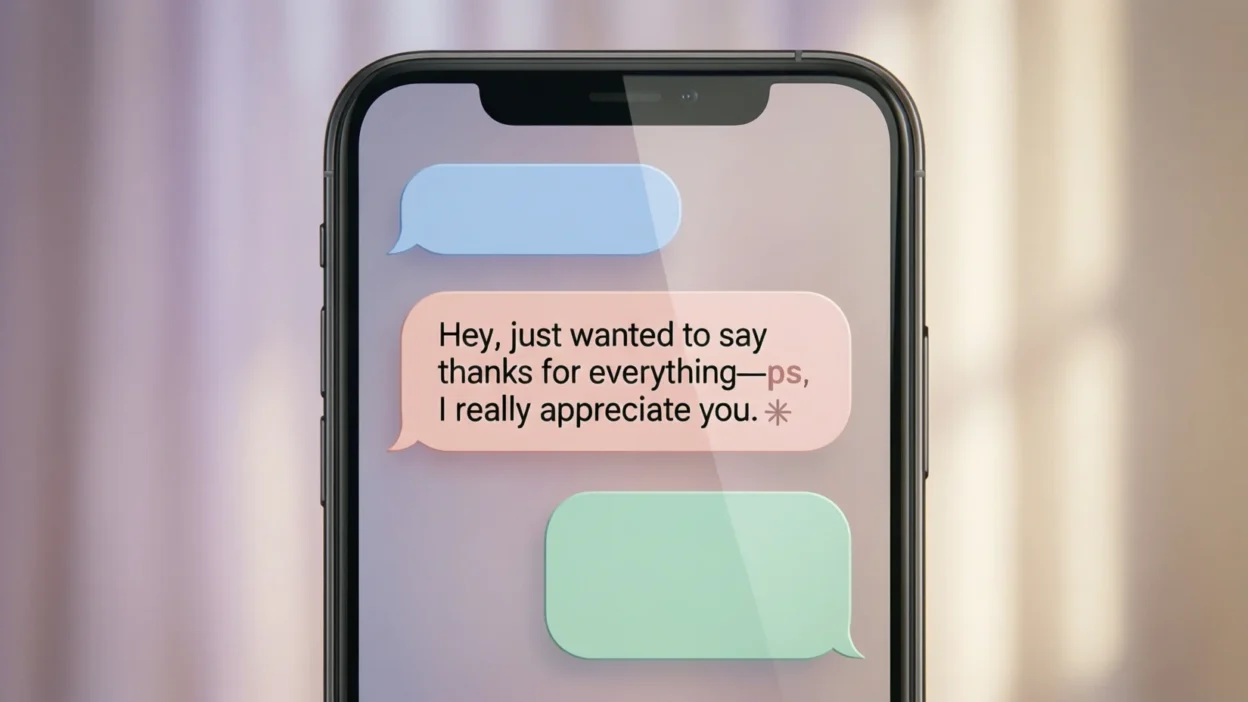
Have you ever sent a text, hit “send,” and then immediately realized you forgot something important? That moment of panic hits, and instead of rewriting the whole message, you just add a quick line at the end. Maybe that’s when you first saw “PS” pop up.
For many of us, it showed up in school notes, emails, or even Instagram captions before we really thought about what it meant. It’s short, casual, and somehow still feels polite. In today’s fast-moving texting culture, PS is one of those little things we all use without thinking twice.
Quick Answer: PS stands for “postscript,” and it’s used to add extra information after the main message.
What Does PS Mean in Text?
PS is short for postscript, a word that comes from Latin and literally means “written after.” In simple terms, it’s an extra note you add after you’ve already finished your main message.
In texting and online chat, PS works the same way it always has in letters and emails. It’s a way to say, “oh, one more thing,” without rewriting everything above.
People use PS because:
- it feels natural and friendly
- it saves time
- it keeps the message flowing
Example sentence:
“see you tomorrow at 6. ps don’t forget the tickets.”
Bold summary: PS means an extra thought or detail added at the end of a message.
Where Is PS Commonly Used?
You’ll see PS almost everywhere people communicate online. It’s part of everyday digital language, not tied to one single platform.
Common places you’ll find PS include:
- text messages and group chats
- instagram captions and comments
- dms on social media apps
- emails (casual and semi formal)
- online forums and community posts
The tone of PS is usually casual to neutral. It’s friendly and informal in texts and social media, but it can also sound polite and thoughtful in emails. It’s not slang-heavy, which makes it safe to use with most age groups.
Realistic Conversation Examples Using PS
Here are some natural, modern chat-style examples. These are written the way people actually text today.
- “i’ll call you later tonight. ps i found your charger”
- “thanks for the help today! ps you were right about the shortcut”
- “just sent the file. ps let me know if it doesn’t open”
- “happy birthday 🎉 ps you’re getting cake tomorrow”
- “we’re meeting at noon. ps wear something warm”
- “good luck on the test! ps you’ve got this”
- “i watched that show. ps the ending was wild”
- “heading out now. ps traffic is obsessed”
- “love the photos you posted. ps that last one is my favorite”
These examples show how PS fits smoothly into informal chat without feeling awkward or forced.
When to Use PS (and When Not To)
Like most chat shorthand, PS works best in the right context. Knowing when to use it helps your message sound natural and clear.
Do use PS when:
- you want to add a small extra detail
- you forgot something after sending or writing the main message
- you want a friendly, conversational tone
- you’re chatting casually or semi-formally
Don’t use PS when:
- the message is very serious or urgent
- you’re writing a strict formal document
- the extra info is more important than the main message
- clarity could be affected
Quick Comparison Table
| Context | Example Phrase | Why It Works / Doesn’t |
|---|---|---|
| casual text | “see you soon. ps bring snacks” | works because tone is relaxed |
| friendly email | “thanks for your time. ps attached is the file” | polite and clear |
| formal report | “ps the data may change” | doesn’t work, too informal |
| emergency message | “call me now. ps it’s urgent” | confusing and risky |
Using PS correctly keeps your communication smooth and easy to follow.
Similar Words and Alternatives to PS
Sometimes you may want a different way to add extra info. Here are some common alternatives and how they’re used.
also
Used mid-sentence or at the end when adding information naturally.
Best for casual chat.
by the way (btw)
More conversational and informal than PS.
Works well in texting and social media.
one more thing
Clear and direct, good for spoken-style messages.
Feels friendly but slightly longer.
note:
More formal and often used in emails or documents.
Sounds professional.
update:
Used when sharing new or changed information.
Common in group chats and work messages.
Each option fits a different tone, but PS stays popular because it’s short, familiar, and flexible.
FAQs About PS Meaning in Text
1. What does PS stand for in texting?
PS stands for postscript, meaning an extra message added after the main text.
2. Is PS slang?
Not exactly. It’s more of a writing abbreviation that became common in texting and online chat.
3. Is PS formal or informal?
It’s mostly casual to neutral. It works in friendly emails but not in strict formal writing.
4. Do young people still use PS?
Yes. While newer slang comes and goes, PS is still widely understood across age groups.
5. Can PS be used on social media?
Absolutely. It’s often used in captions, comments, and dms to add an extra thought.
6. Does PS change the meaning of a message?
No, it just adds information. The main message stays the same.
7. Can PS be used more than once?
It can, but using it too many times may look messy or confusing.
Final Thought
So, what does PS stand for? At its core, it means postscript, a simple way to add one more thought after you’ve finished your message. From handwritten letters to modern texting culture, PS has survived because it’s useful, friendly, and easy to understand.
If you’re chatting with friends, posting online, or sending a quick email, PS helps you say that extra thing without overthinking it. In today’s digital communication, small details like this make messages feel more human and connected.