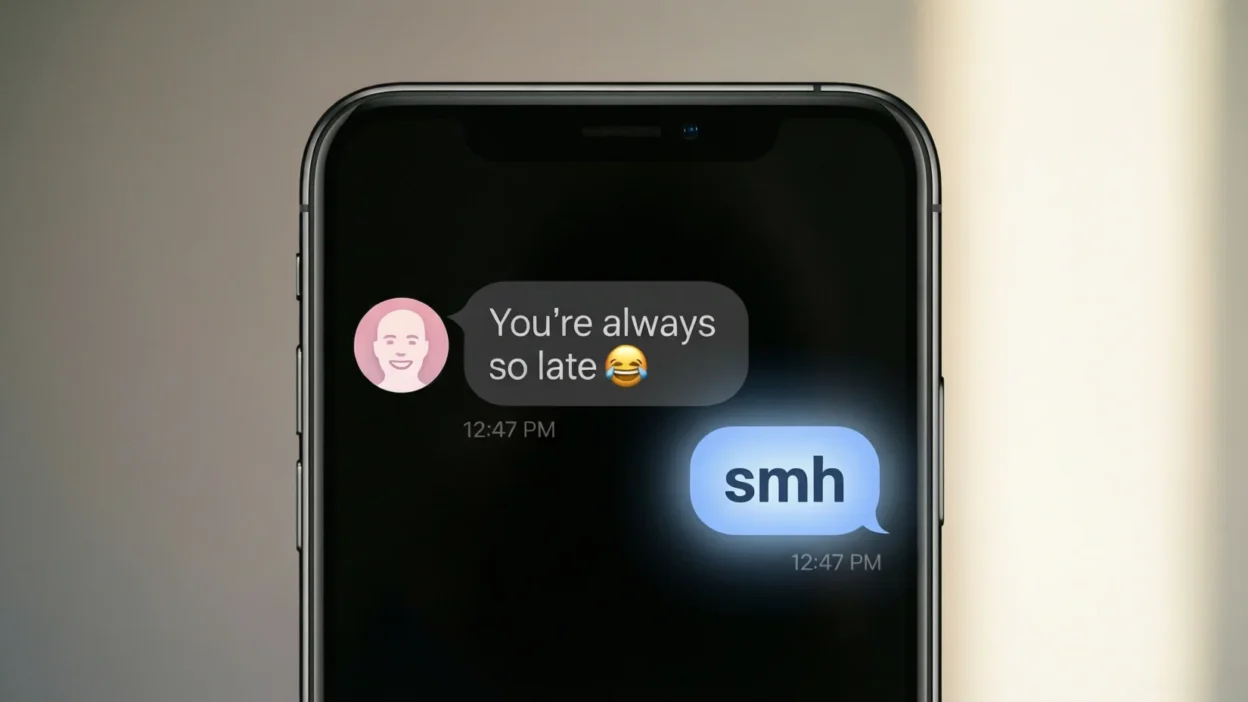
The first time I saw “smh” in a text, I honestly thought it was a typo. A friend replied to a long message I sent with just three letters: smh. No emoji. No explanation. Just that. I stared at my phone, confused, wondering if I had said something wrong or missed a joke. Later, I saw it again on Instagram comments, Twitter replies, and group chats.
That’s when I realized this tiny abbreviation shows up everywhere in texting culture. If you’ve seen it too and wondered what it really means or how to use it without sounding awkward you’re in the right place.
Quick Answer:
SMH means “shaking my head,” and it’s used in text to show disappointment, disbelief, or mild frustration.
What Does SMH Mean in Text?
SMH stands for “shaking my head.” It’s a popular texting abbreviation used to show how someone feels without typing a full sentence.
In plain English, it means: “I can’t believe this,” “That’s disappointing,” or “Wow, that was a bad idea.”
People use smh because it’s quick, expressive, and fits perfectly into fast-moving online chats. Instead of explaining your reaction, you just drop three letters and the message is clear.
Example sentence:
you forgot your keys again? smh.
Bold summary: SMH means “shaking my head” and shows disappointment, disbelief, or frustration in text messages.
Where Is SMH Commonly Used?
You’ll see smh almost everywhere online. It’s deeply rooted in modern texting culture and social media slang.
Common places you’ll find it include:
- Text messages with friends or family
- Social media comments on Instagram, TikTok, X (Twitter), and Facebook
- DMs and private chats
- Group chats where reactions are quick and casual
- Gaming chats during live play or streams
- Online forums and Reddit threads
The tone of smh is casual and informal. It’s not rude by default, but it can sound judgmental depending on context.
You should not use smh in formal emails, school assignments, or professional messages.
Realistic Text Conversation Examples
Here are some natural, lowercase examples that reflect how people actually use smh in real chats:
- he wore sandals in the rain smh
- you really skipped breakfast again? smh
- they delayed the update for the third time smh
- bro said he didn’t study at all smh
- smh i told you that link was fake
- the line is still not moving smh
- she believed that rumor smh
- smh this app crashes every time
These examples show how smh works as a reaction rather than a full statement.
When to Use and When Not to Use SMH
Using smh at the right time makes you sound natural. Using it at the wrong time can feel rude or confusing.
✅ When to Use SMH
- When reacting to something disappointing or silly
- In casual chats with friends
- On social media comments or replies
- When you want to express disbelief quickly
❌ When Not to Use SMH
- In professional or formal conversations
- When someone shares serious or emotional news
- If you want to sound supportive or caring
- With people who may not understand texting slang
Comparison Table
| Context | Example Phrase | Why It Works or Doesn’t |
| friend forgot plans | smh you did it again | works in casual tone |
| coworker email | smh about the deadline | sounds unprofessional |
| joke online | smh this is wild | fits social media slang |
| serious apology | smh that happened | feels insensitive |
Similar Slang Words and Alternatives
Sometimes smh isn’t the perfect fit. Here are common alternatives and what they mean.
| Slang | Meaning | When to Use |
| lol | laughing out loud | something funny |
| fr | for real | agreement or emphasis |
| bruh | disbelief or annoyance | mild frustration |
| omg | oh my god | surprise or shock |
| facepalm | embarrassment | obvious mistakes |
| idk | i don’t know | uncertainty |
| wtf | strong confusion | informal, intense reaction |
Each of these fits different emotions, so choose based on tone and situation.
Why People Use SMH So Often
Texting is fast. People want to react instantly without typing long explanations.
SMH works because:
- It saves time
- It adds emotion to plain text
- It feels natural in informal chat
- It’s widely understood online
In texting culture, short reactions are powerful. SMH says a lot with very little.
Can SMH Be Misunderstood?
Yes, sometimes.
Because smh can sound judgmental, the reader might think you’re annoyed with them rather than the situation.
To avoid confusion:
- Pair it with context
- Use emojis if needed
- Avoid it during serious conversations
Example fix:
smh that traffic today was obsessed😩
SMH in Different Age Groups
- Teens and young adults: use it daily in texts and comments
- Millennials: very familiar and comfortable with it
- Older users: may recognize it but use it less
It’s best used with people who are already familiar with social media slang.
SMH vs Shaking Head Emojis
You might wonder why people use smh instead of emojis.
SMH feels:
- More text-native
- Less playful than emojis
- Slightly more expressive in words
Both work, but smh fits better in fast, word based chats.
FAQs About SMH Meaning in Text
1. What does smh mean in text messages?
It means “shaking my head” and shows disappointment or disbelief.
2. Is smh rude?
Not usually, but it can sound judgmental depending on context.
3. Can I use smh on social media?
Yes, it’s very common on platforms like Instagram, TikTok, and X.
4. Should I capitalize smh?
Both smh and SMH are fine, but lowercase feels more casual.
5. Is smh used by all age groups?
It’s most popular with younger users, but many adults understand it.
6. Can smh be used as a reply alone?
Yes, it often works as a standalone reaction.
Final Thought
So, what does smh mean in text? It’s a simple, powerful way to say “I’m disappointed,” “I can’t believe this,” or “that wasn’t smart.” In today’s texting culture, smh helps people react quickly and express emotion without typing a full sentence.
Used in the right context, it sounds natural and relatable. Just remember to keep it casual, be mindful of tone, and avoid it in serious or professional situations.