The first time many people see the word STEM, it’s usually in a school post, a scholarship ad, or a tweet about future jobs. Maybe a friend says, “i’m going into stem,” or you see a hashtag like STEMlife scrolling past on social media. At first, it sounds like just another online buzzword.
You might nod along, half-guessing what it means, but still feel unsure. Is it a subject? A career path? A tech thing? If you’ve ever paused mid-scroll wondering what people really mean when they say STEM, you’re not alone. Let’s break it down in the simplest, clearest way possible.
Quick Answer
STEM stands for Science, Technology, Engineering, and Mathematics.
What Does STEM Stand For? (Full Meaning Explained Simply)
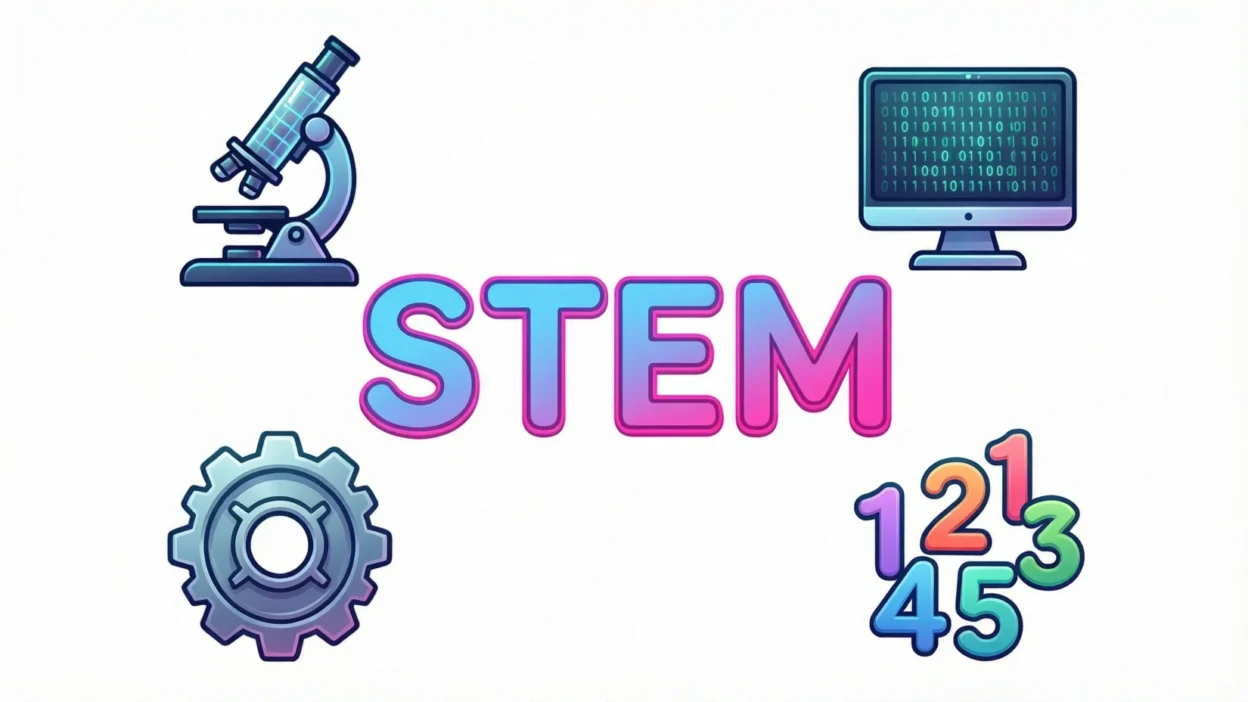
STEM is an acronym made from the first letters of four major fields:
- S Science
- T Technology
- E Engineering
- M Mathematics
In plain English, STEM is a group of subjects that focus on understanding how the world works, using logic, numbers, and technology to solve problems.
People use the term STEM to talk about education, careers, skills, and even hobbies that involve problem-solving, experiments, coding, building things, or working with data.
Instead of saying all four subjects every time, people shorten it to STEM because it’s faster, easier, and widely understood in schools and online conversations.
Example sentence:
“she wants a stem career because she loves math and tech.”
Bold summary: STEM stands for Science, Technology, Engineering, and Mathematics, a group of subjects focused on problem-solving and innovation.
Where Is the Term STEM Commonly Used?
The word STEM shows up everywhere, both online and offline. It’s not slang, but it’s often used casually in digital conversations.
You’ll commonly see STEM used in:
- School and college discussions
- Scholarship and job postings
- Social media captions and hashtags
- Online forums and study groups
- Career advice videos and blogs
- Group chats about classes or future plans
On platforms like Instagram, TikTok, Twitter (X), Reddit, and LinkedIn, people use STEM to talk about education, career goals, or personal interests.
Tone:
- Mostly neutral to informal
- Can be formal in academic or professional settings
- Casual in texts, comments, and DMs
It works well in both serious and relaxed conversations, which is why it’s so popular.
Realistic Conversation Examples Using “stem”
Here are some natural, modern chat-style examples written the way people actually text online:
- “i’m switching my major to stem this year”
- “stem classes are hard but worth it”
- “she’s really into stem stuff like coding and robotics”
- “there are more jobs in stem fields rn”
- “i never thought i’d like stem but physics changed my mind”
- “stem careers pay pretty well tbh”
- “our school is pushing more stem programs”
- “he’s amazing at math, total stem brain”
- “stem isn’t just for geniuses, anyone can learn it”
These examples show how flexible and natural the term feels in everyday texting culture.
When to Use and When Not to Use STEM
Even though STEM is widely accepted, context still matters. Here’s how to use it the right way.
✅ When to Use STEM
Do:
- Use it when talking about education or careers
- Use it in school-related chats or posts
- Use it in job or skill discussions
- Use it casually with friends who understand the term
- Use it in social media captions or hashtags
❌ When Not to Use STEM
Don’t:
- Use it with people who may not know the term without explaining
- Use it as slang in serious emotional conversations
- Assume it means only computers or coding
- Overuse it in formal writing without defining it first
Small Comparison Table
| Context | Example Phrase | Why It Works / Doesn’t Work |
| school chat | “i’m applying for a stem scholarship” | works because it’s education-related |
| job post | “looking for stem graduates” | works in a professional setting |
| casual dm | “he’s a stem guy” | works informally with context |
| emotional talk | “this breakup is so stem” | doesn’t work, wrong context |
Similar Terms and Alternatives to STEM
While STEM is the most common term, there are a few related words and variations you might see online.
STEAM
Meaning: Science, Technology, Engineering, Arts, and Mathematics
When to use: When creativity and design are included with technical skills
Tech Fields
Meaning: Careers related to computers, software, and IT
When to use: When you’re only talking about technology, not science or math
Engineering Fields
Meaning: Jobs focused on building, designing, and problem-solving
When to use: When discussing engineering specifically
Science Fields
Meaning: Biology, chemistry, physics, and research-based subjects
When to use: When math or tech is not the focus
Quantitative Fields
Meaning: Number-based subjects like math, statistics, and data
When to use: In academic or research discussions
Each term has a slightly different meaning, but STEM remains the most widely used umbrella term.
Frequently Asked Questions About STEM
1. Is STEM a slang word?
No. STEM is an official acronym, but it’s often used casually in texts and social media.
2. Does STEM only mean computer jobs?
No. STEM includes science, engineering, and math, not just coding or tech jobs.
3. Is STEM used worldwide?
Yes. STEM is recognized globally, especially in education and career planning.
4. Can arts students be part of STEM?
Traditionally no, but STEAM includes arts along with STEM subjects.
5. Is STEM only for smart people?
Not at all. STEM is about learning skills, not being born “super smart.”
6. Is the term STEM formal or informal?
It can be both, depending on how and where it’s used.
7. Why is STEM so popular online?
Because STEM careers are linked to future jobs, innovation, and high demand, making it a hot topic in digital spaces.
Final Thought
So, what does STEM stand for? It’s short for Science, Technology, Engineering, and Mathematics, and it represents more than just school subjects. In today’s digital world, STEM is a symbol of future skills, problem solving, and innovation.
If you see it in a text, a hashtag, a job post, or a classroom discussion, knowing what STEM means helps you stay informed and confident in modern conversations. It’s not just a buzzword, it’s a big part of how people talk about learning, careers, and the future.