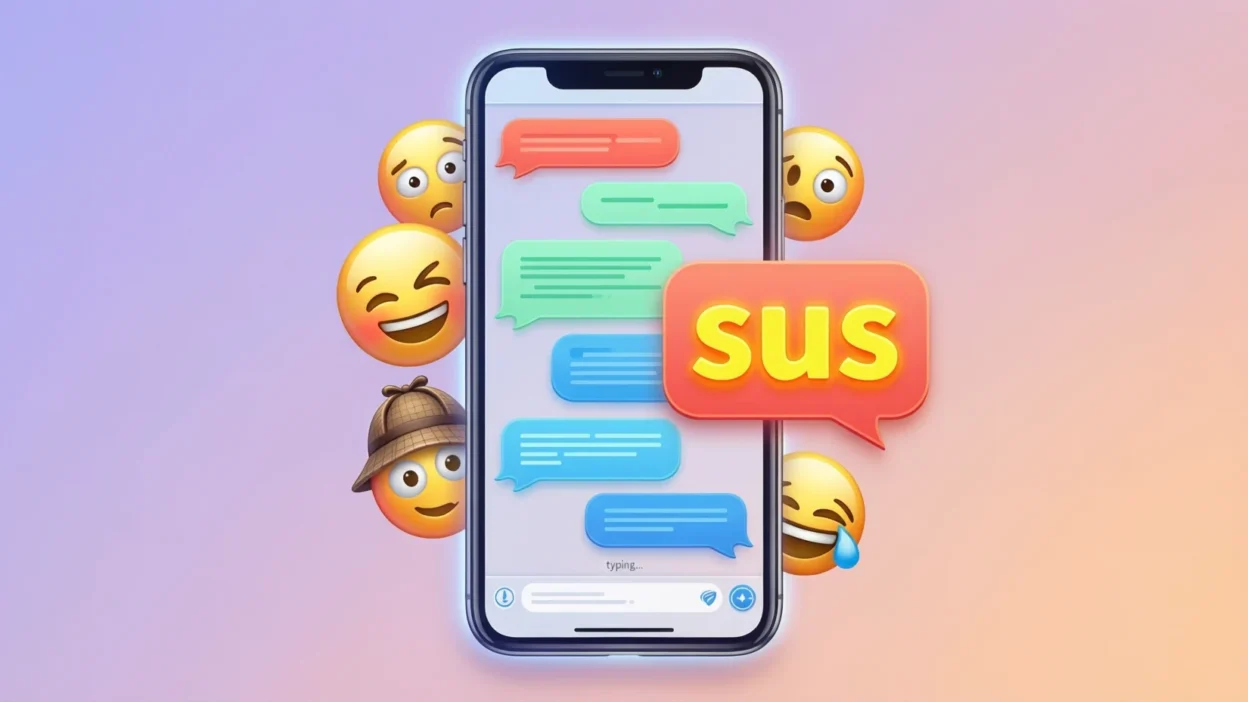
The first time I saw the word “sus”, it popped up in a group chat after someone sent a very questionable screenshot. One friend replied, “that’s kinda sus 👀,” and everyone instantly understood what they meant no long explanation needed.
If you’ve ever scrolled through comments, watched gaming streams, or read DMs and felt confused by this short word, you’re not alone. “Sus” shows up everywhere online, especially in casual chats and memes. It’s short, fast, and packed with meaning. Let’s break it down in a simple way so you never feel out of the loop again.
Quick Answer:
“Sus” means suspicious or questionable, often used to say that something or someone doesn’t seem right.
What Does “Sus” Mean in Text?
Sus is short for suspicious. There’s no hidden full form or acronym it’s simply a slang shortcut people use in texting and online chat.
In plain English, “sus” means something feels off, weird, or untrustworthy. It’s often used when someone’s behavior, message, or story doesn’t quite add up.
People use “sus” because it’s:
- Fast to type
- Easy to understand
- Casual and playful
- Perfect for online conversations
You don’t need a long explanation when one word does the job.
Example sentence:
“he said he forgot his phone, but he posted a story an hour ago sus.”
Bold summary: “Sus” means suspicious something feels off or doesn’t seem honest.
Where Is “Sus” Commonly Used?
You’ll mostly see sus in informal and casual settings. It’s part of modern texting culture and social media slang.
Common places where “sus” appears:
- Text messages with friends
- Social media comments (Instagram, TikTok, X)
- DMs and private chats
- Gaming chats, especially multiplayer games
- Online forums and meme pages
The tone is almost always casual and informal. Sometimes it’s joking, sometimes serious, but it’s rarely aggressive unless paired with other words.
You would not use “sus” in:
- School essays
- Work emails
- Professional conversations
In those cases, “suspicious” or “concerning” works better.
Realistic Conversation Examples Using “Sus”
Here are some natural, modern examples you might see online. All are written in lowercase, just like real chats.
- “why did he leave the group chat right after that message? kinda sus”
- “she says she’s asleep but she’s liking post sus behavior”
- “that account has no posts and 10k followers. very sus”
- “bro you said you were broke but bought new shoes? sus”
- “this link looks sus, i’m not clicking it”
- “he keeps dodging the questio that’s sus”
- “idk man, the timing feels sus to me”
- “you laughing way too hard for no reason. sus”
These examples show how flexible the word is. It can be playful, serious, or just observant.
When to Use and When Not to Use “Sus”
Like all slang, sus works best in the right situation.
✅ Do Use “Sus” When:
- chatting with friends
- joking around in group chats
- reacting to weird online behavior
- talking about games or social media drama
- keeping the tone light and casual
❌ Don’t Use “Sus” When:
- writing formal emails or reports
- talking to teachers, bosses, or clients
- discussing serious accusations
- you need to sound respectful or professional
Small Comparison Table
| context | example phrase | why it works / doesn’t |
| group chat | “that story doesn’t add up. sus.” | casual tone fits friends |
| gaming chat | “player 3 is acting sus” | common slang in games |
| work email | “this request is sus” | too informal |
| school essay | “his actions were sus” | not academic language |
Similar Slang Words and Alternatives to “Sus”
If you want variety or a slightly different tone, here are some common alternatives.
| slang / word | meaning | when to use it |
| sketchy | something feels unsafe or shady | casual chats |
| shady | dishonest or sneaky behavior | informal talk |
| weird | unusual but not serious | everyday texting |
| off | something doesn’t feel right | neutral casual |
| fishy | suspicious in a playful way | light conversation |
| questionable | doubtful or concerning | semi-casual |
| red flag | warning sign about behavior | social media or dating talk |
Each word has a slightly different vibe, but sus is the shortest and most internet-friendly.
Why Did “Sus” Become So Popular?
The word sus exploded in popularity because of online gaming, especially Among Us. Players constantly accused each other of being “sus” when someone acted suspicious.
From there, it spread to:
- TikTok memes
- Twitter posts
- Instagram comments
- Everyday texting
Its rise shows how internet culture loves short, expressive words that say a lot with very little effort.
Common Misunderstandings About “Sus”
Some people think:
- “sus” is rude it’s usually not
- “sus” means guilty it just means suspicious
- only gamers use it now everyone does
Context matters. Tone, emojis, and situation decide whether it’s playful or serious.
Frequently Asked Questions About “Sus”
1. Is “sus” a bad word?
No. “Sus” is not offensive on its own. It’s usually playful or casual.
2. Can adults use the word “sus”?
Yes. While it’s popular with younger users, many adults use it online too.
3. Is “sus” only used in gaming?
No. Gaming made it popular, but now it’s common in texting, social media, and comments.
4. Can “sus” be used seriously?
Yes, but carefully. It’s better for light suspicion, not serious accusations.
5. What’s the difference between “sus” and “suspicious”?
“Sus” is informal slang, while “suspicious” is formal and appropriate for professional settings.
6. Does “sus” always mean someone is lying?
Not always. It just means something feels off, not proven wrong.
Final Thought
So, what does sus mean? In simple terms, it’s a quick, casual way to say something seems suspicious or doesn’t feel right. It’s a big part of modern texting culture, social media slang, and online chat language.
When used with friends or in relaxed settings, it fits perfectly. Just remember to avoid it in formal situations. Understanding words like “sus” helps you stay connected, confident, and fluent in today’s digital conversations.