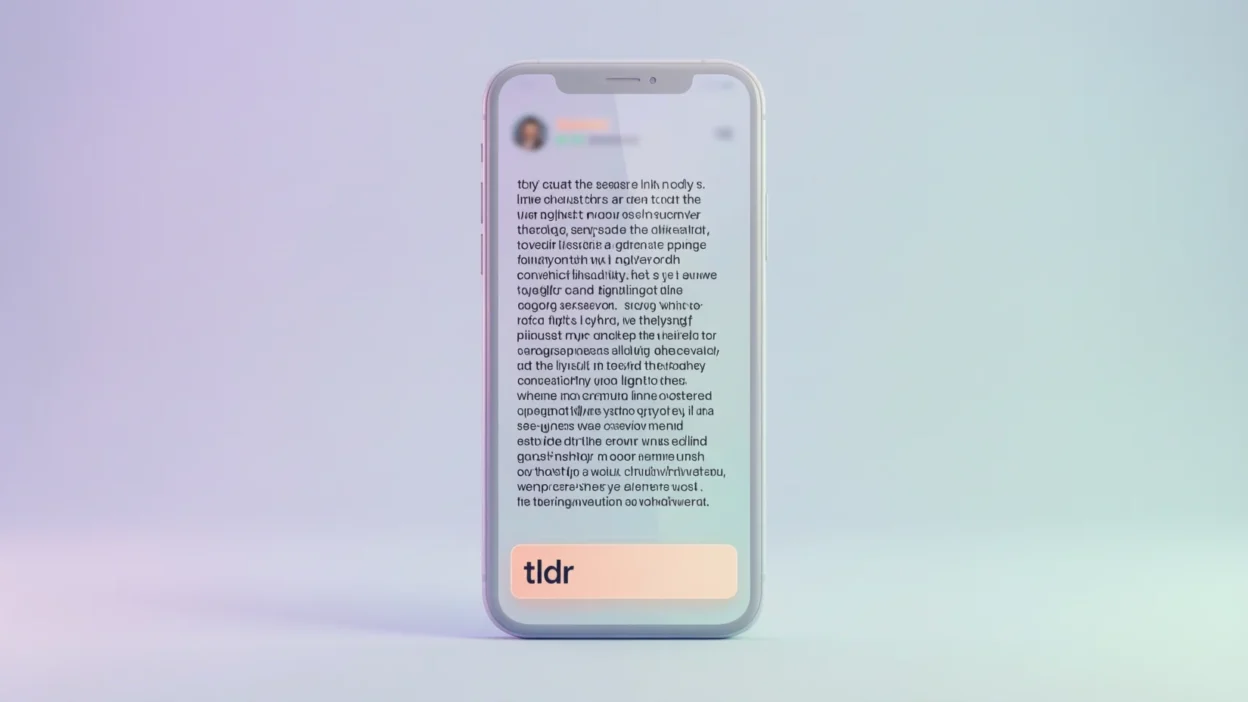
The first time I saw tldr, I was scrolling through a long comment on a forum. It went on forever. Just when I was about to give up, I saw one short line at the bottom: “tldr: it’s not worth it.” I laughed, felt relieved, and instantly understood why people use it.
Since then, I’ve seen tldr everywhere texts, social media posts, Reddit threads, even work chats. If you’ve ever felt confused or curious about this tiny but powerful internet term, you’re not alone. Let’s break it down in a simple, friendly way.
Quick Answer:
TLDR means “Too Long; Didn’t Read,” and it’s used to summarize long text or say something was too long to read.
What Does TLDR Mean in Text?
TLDR stands for “Too Long; Didn’t Read.”
It’s a popular texting abbreviation and online chat meaning used when a message, post, or article feels very long.
In plain English, tldr is a shortcut. It tells people, “Here’s the short version,” or “I didn’t read all of that.”
People use it for two main reasons:
- To summarize long content
- To politely (or jokingly) say something is too long
Simple example:
“tldr: he was late because his alarm didn’t go off.”
In this case, the long story came first, and tldr introduces the quick summary.
Bold takeaway: TLDR means “too long; didn’t read” and is used to give or request a short summary of long content.
Where Is TLDR Commonly Used?
You’ll mostly see tldr in casual and informal chat. It’s a big part of modern texting culture and internet slang.
Common places where TLDR appears:
- Text messages between friends
- Social media posts (Twitter/X, Instagram captions, Facebook comments)
- Reddit and online forums
- YouTube comments
- Discord and gaming chats
- Group chats and DMs
Tone of TLDR
- Casual: Yes
- Informal: Yes
- Neutral: Sometimes
- Formal: No
Using tldr in a school essay, email to a boss, or official document is usually not appropriate.
Realistic Conversation Examples Using TLDR
Here are some natural, modern examples written like real chats. All are in lowercase, just like people usually type them.
- “this post is wild lol tldr?”
- “tldr: she broke up with him over text”
- “i read half of it and gave up. tldr please”
- “tldr at the bottom for anyone busy”
- “not gonna lie that was long tldr?”
- “tldr: the update got delayed again”
- “i added a tldr so it’s easier to read”
- “tldr saved me so much time”
- “bro wrote a novel. tldr would help 😭”
These examples show how tldr fits naturally into everyday online conversations.
When to Use TLDR (and When Not to)
Knowing when to use tldr helps you sound natural instead of rude or confusing.
✅ Do use TLDR when:
- A post or message is very long
- You want to give a quick summary
- You’re chatting casually with friends
- You’re commenting online
- You want to save people time
❌ Don’t use TLDR when:
- Writing professional emails
- Talking to teachers or bosses
- Writing formal content
- The message is already short
- You want to sound polite in serious situations
Quick Comparison Table
| Context | Example Phrase | Why It Works / Doesn’t |
|---|---|---|
| group chat | “tldr: meeting moved to friday” | works because it’s casual |
| reddit post | “tldr at the end” | helpful for long posts |
| work email | “tldr: fix it” | sounds unprofessional |
| short text | “tldr: ok” | unnecessary and confusing |
Similar Slang Words and Alternatives to TLDR
There are other slang terms and phrases that work like tldr, depending on the situation.
Common alternatives:
Summary:
Used in neutral or semi formal settings.
Example: “summary: the plan changed.”
In short:
A softer, more polite option.
Example: “in short, we’re leaving early.”
Long story short:
Casual and storytelling-friendly.
Example: “long story short, we missed the train.”
Quick recap:
Great for updates and explanations.
Example: “quick recap before we start.”
Bottom line:
Often used to highlight the main point.
Example: “bottom line: it didn’t work.”
Didn’t read:
More blunt and sometimes rude.
Example: “didn’t read all that.”
Each option fits different tones, but tldr remains the most popular in social media slang and informal chat.
Why TLDR Is So Popular in Texting Culture
Modern online life moves fast. People scroll quickly, skim posts, and jump between apps. TLDR fits perfectly into this world.
Reasons people love using TLDR:
- Saves time
- Makes long content easier
- Feels casual and relatable
- Shows awareness of short attention spans
- Encourages more people to engage
In a way, tldr respects the reader’s time, which is why it’s everywhere online.
FAQs About TLDR Meaning
1. What does TLDR mean in texting?
It means “too long; didn’t read” and is used to summarize or skip long messages.
2. Is TLDR rude?
It can be if used sarcastically. With friends, it’s usually harmless and funny.
3. Is TLDR lowercase or uppercase?
Both are fine. tldr is more common in casual chat.
4. Do adults use TLDR or just teens?
People of all ages use it, especially online and on social media.
5. Can I use TLDR at work?
Only in very casual internal chats. Avoid it in formal communication.
6. Does TLDR always mean someone didn’t read?
Not always. Often it introduces a summary, not an insult.
7. Is TLDR still popular?
Yes. It’s still widely used in online chat, forums, and social media.
Final Thought
So, what does tldr mean? It’s a simple, powerful way to say “this is the short version” or “that was too long to read.” In today’s fast paced digital world, tldr helps people communicate quickly and clearly without wasting time.
As long as you use it in the right setting, it’s a smart and friendly part of modern texting culture. Once you understand it, you’ll start noticing it everywhere and probably using it yourself.