
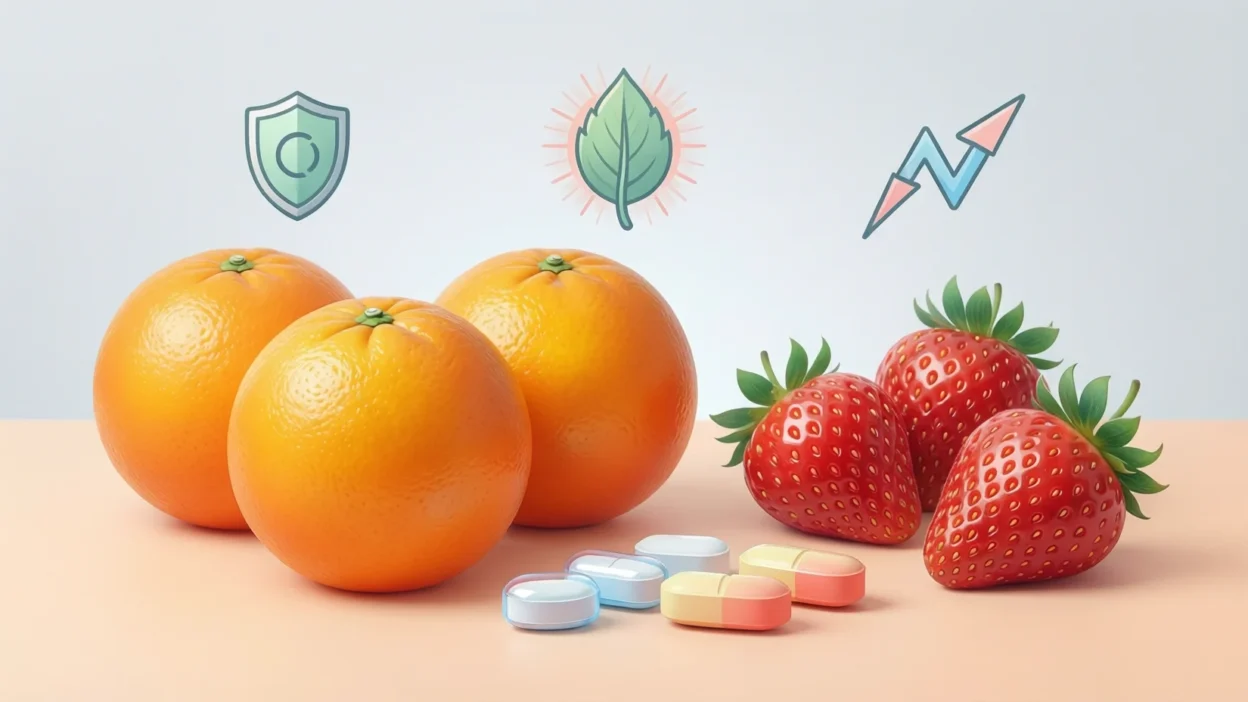
The first time many people hear about vitamin C, it’s not in a science class or doctor’s office it’s online. Maybe you saw someone comment, “take vitamin c, you’ll be fine,” under a tweet about a cold. Or a friend texted you, “loading up on vitamin c this week,” during flu season.
It pops up in group chats, wellness videos, skincare posts, and even memes. At first, it sounds like just another health buzzword everyone throws around. But then you start wondering what does vitamin c do, really? Is it just hype, or is there something important behind all that online talk?
Quick Answer: Vitamin C helps your body stay healthy by supporting your immune system, healing wounds, protecting cells, and keeping your skin, bones, and blood vessels strong.
What Does Vitamin C Do? (Meaning Explained Simply)
Vitamin C is not slang, not an abbreviation, and not a texting shortcut. It’s a real nutrient, also called ascorbic acid, that your body needs every single day.
In plain English, vitamin C helps your body fight sickness, repair itself, and stay strong. Your body cannot make vitamin C on its own, so you must get it from food or supplements.
People talk about vitamin C a lot online because it’s easy to understand, easy to get, and linked to feeling better especially when you’re tired, stressed, or sick.
Simple example sentence:
“i’m drinking orange juice for the vitamin c because i feel a cold coming.”
Bold summary: Vitamin C is an essential nutrient that supports immunity, healing, and overall body health.
What Does Vitamin C Do in the Body?
Vitamin C works quietly in the background, helping many systems at once. Here’s what it actually does inside your body.
Supports the Immune System
Vitamin C helps your white blood cells work better. These cells fight germs like viruses and bacteria. That’s why people mention vitamin C so much during cold and flu season.
Helps Heal Wounds
When you get a cut or scrape, vitamin C helps your body make collagen, which repairs skin and tissue.
Keeps Skin Healthy
Vitamin C supports smooth, firm skin by helping collagen production. That’s why it’s popular in skincare talk and beauty content online.
Protects Cells
Vitamin C is an antioxidant, which means it protects your cells from damage caused by stress, pollution, and everyday life.
Helps Absorb Iron
It helps your body absorb iron from plant-based foods, which supports healthy blood and energy levels.
Where Is “Vitamin C” Commonly Used Online?
Even though vitamin C is a medical term, it’s often used in casual and informal online conversations.
You’ll commonly see it in:
- text messages between friends
- social media posts (tiktok, instagram, x)
- comments under health or beauty videos
- dms about feeling sick or tired
- fitness and wellness forums
- skincare and self care discussions
Tone: Mostly casual and neutral, sometimes friendly or advice-based. It’s not formal unless used in medical articles or professional health posts.
People use it online because it sounds helpful without being complicated.
Realistic Text & Chat Examples (7–10)
Below are natural, modern examples of how people actually talk about vitamin c online. All written in lowercase, just like real chats.
- “i think i’m getting sick, gonna take some vitamin c tonight”
- “everyone on tiktok is obsessed with vitamin c serum lately”
- “doctor said i need more vitamin c in my diet”
- “orange juice season = vitamin c season”
- “vitamin c actually helps your skin glow fr”
- “i forget how important vitamin c is until i feel weak”
- “added more fruits for the vitamin c boost”
- “my mom swears vitamin c fixes everything”
When to Use and When Not to Use “Vitamin C”
Even though vitamin C isn’t slang, how and where you use it matters in digital communication.
✅ Do Use It When:
- talking about health, wellness, or diet
- sharing tips about colds, immunity, or energy
- discussing skincare or beauty routines
- chatting casually with friends or family
- commenting on fitness or lifestyle posts
❌ Don’t Use It When:
- making medical claims or giving serious medical advice
- joking in serious or sensitive health situations
- replacing professional diagnosis
- using it as a cure all for everything
Small Comparison Table
| Context | Example Phrase | Why It Works / Doesn’t |
|---|---|---|
| casual chat | “taking vitamin c to stay healthy” | works, friendly and common |
| skincare post | “vitamin c helps brighten skin” | works, widely accepted |
| medical advice | “vitamin c will cure your illness” | doesn’t work, misleading |
| joke | “vitamin c fixes all problems” | ok as humor, not facts |
Similar Terms and Related Alternatives
People often mention vitamin C alongside other health-related terms. Here’s what they mean and when to use them.
| Term | Meaning | When to Use |
|---|---|---|
| immune booster | something that helps immunity | casual health talk |
| antioxidants | substances that protect cells | wellness or skincare content |
| supplements | pills or powders for nutrients | diet or fitness discussions |
| vitamin d | another essential vitamin | immunity and bone health chats |
| multivitamin | mix of vitamins | general health conversations |
| collagen | protein for skin and joints | beauty and skincare topics |
These terms often appear together in online chats, especially in wellness-focused spaces.
Why Is Vitamin C So Popular in Texting and Social Media?
Vitamin C fits perfectly into modern texting culture because:
- it’s short and easy to say
- most people already know about it
- it feels helpful without being preachy
- it connects health, beauty, and lifestyle
Unlike complicated medical terms, vitamin C feels friendly and familiar. That’s why it shows up in comments, captions, and everyday chats.
FAQs About What Vitamin C Does
1. What does vitamin C do for your immune system?
Vitamin C helps your immune cells work better and supports your body when fighting infections.
2. Is vitamin C slang or a texting abbreviation?
No. Vitamin C is a real nutrient, not slang or chat shorthand.
3. Can vitamin C prevent colds?
It may help support immunity, but it does not guarantee you won’t get sick.
4. Why do people talk about vitamin C on social media?
Because it’s linked to health, skincare, energy, and wellness trends that are popular online.
5. Is vitamin C only for adults?
No. People of all ages need vitamin C, though amounts vary.
6. Can vitamin C improve skin?
Yes, it supports collagen and is commonly discussed in skincare routines.
7. Is it okay to joke about vitamin C online?
Yes, casually. Just don’t spread false medical claims.
Final Thought
So, what does vitamin c do? In simple terms, it helps your body stay strong, heal faster, and fight sickness and that’s why people talk about it so much online.
Even though it’s not slang or a texting abbreviation, vitamin C has become part of everyday digital conversations because it’s easy to understand and genuinely useful. From casual texts to social media comments, it fits naturally into modern online communication. Knowing what it really does helps you understand those conversations better and make smarter health choices too.